
The Man Behind Father
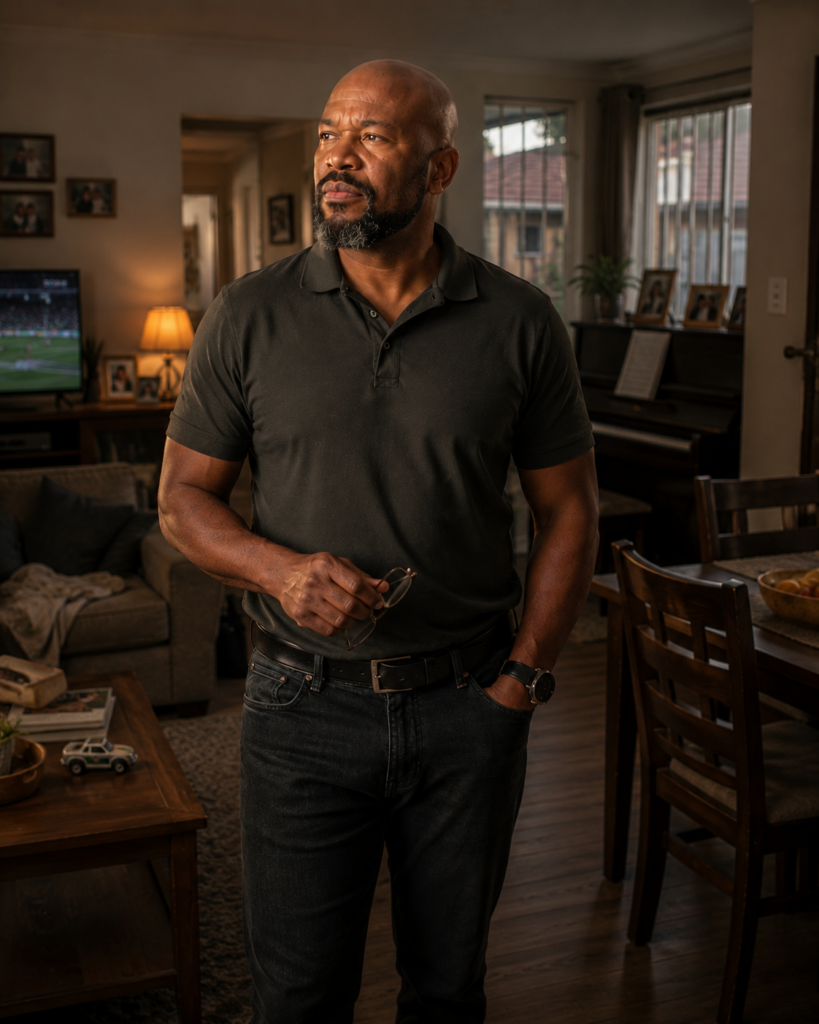
The man behind Father arrives home at his usual time. His arrival is a quiet indicator that the day has ended, as the evening begins to dim the light.
The man hasn’t said anything…
but his presence roars as the sound of the gate closes behind him.
Before the man behind Father gets out of his car, gets off his bicycle, or places his foot on the welcome mat…
he pauses before opening the door.
Before running into the ones he loves and provides for.
The pause…
the pause helps him take one last breath before he enters his night shift.
And sometimes, before that last breath is even completed…
the door opens.
He is greeted by maybe one or two smiling faces running towards him with full joy and energy.
One voice wants to show the man the results they accomplished at school. Another maybe wants his help completing a project that’s due the following day.
Then another, more senior voice appears…
asking the man to come so they can privately review and discuss the outstanding debts that are due.
The Version Everyone Needed
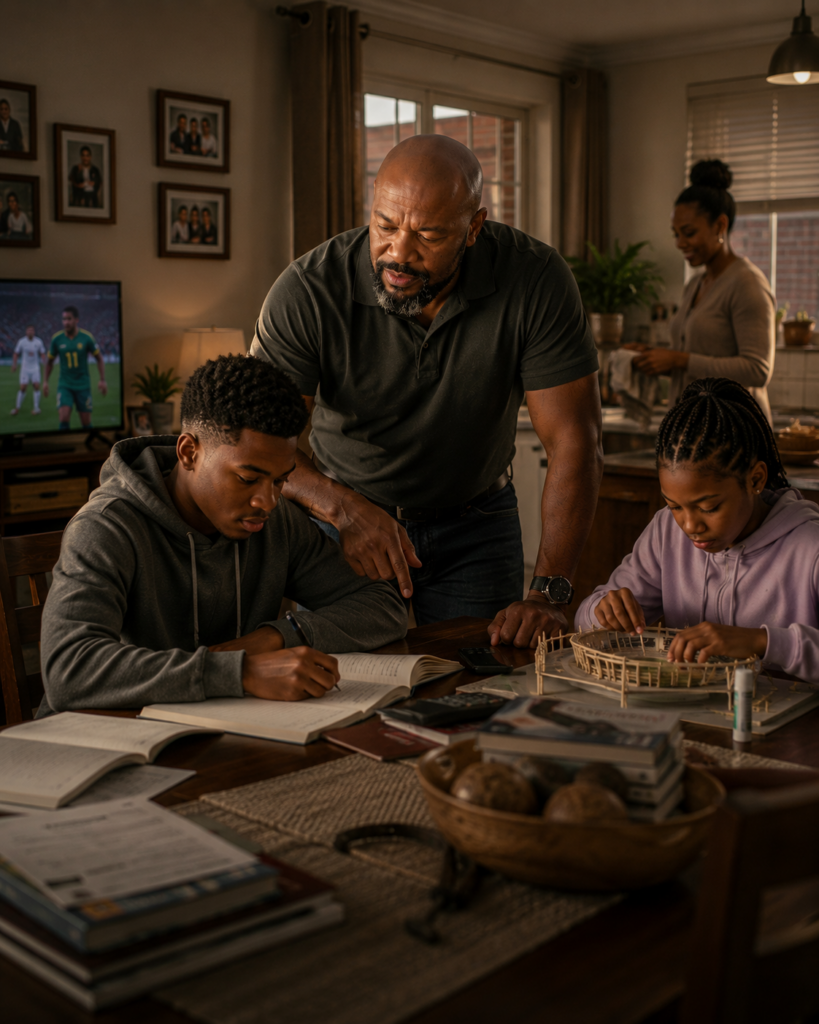
The version everyone needed…
was exactly what the man behind Father became.
Looking back now, I realise Father did not begin as the provider, protector, guide and problem solver everyone eventually depended on. Before anybody called him Father, there was a younger man still learning what responsibility meant. And sometimes, becoming Father begins long before a man fully understands what the role will ask him to carry… explored deeper in The Boy Who Became Father.
Looking back now, I realise Father was not the first version the man had learnt to become for other people. Long before the responsibilities had names, there may already have been parts of him that understood how to become what a room expected. Over time, the role simply became more convincing… explored deeper in The Version They Needed.
He helped one child with homework. Then went and became a mentor, enforcer and assistant builder for the other child.
The enforcer version appeared because the child had known about this project for weeks…
yet somehow left it until the last minute.
That version encouraged responsibility.
Accountability.
And even delivered a quick history lesson about how, back in his day, his own father probably wouldn’t have sat him down like this. He would’ve rather let him learn the hard way.
So the child should be grateful that his father is present…
but also understand that being present doesn’t mean he appreciates delay.
Then, seconds later…
as the child digested those words…
Father changed again.
From enforcer…
to guide.
He showed the child how to build the project with limited resources, but with enough strategy to give what they had an enormous advantage.
Then he changed again.
From guide…
to assistant.
This time, he allowed the child to build it themselves while remaining close enough to guide them…
making sure the child was actually the one doing the work.
A few hours passed.
The project stood. The homework was done.
But the night wasn’t.
The senior voice from earlier was still waiting.
So the man moved again…
sat down, looked at what was outstanding, and began working through possible solutions for what needed to be handled next.
When The Man Behind Father Didn’t Know
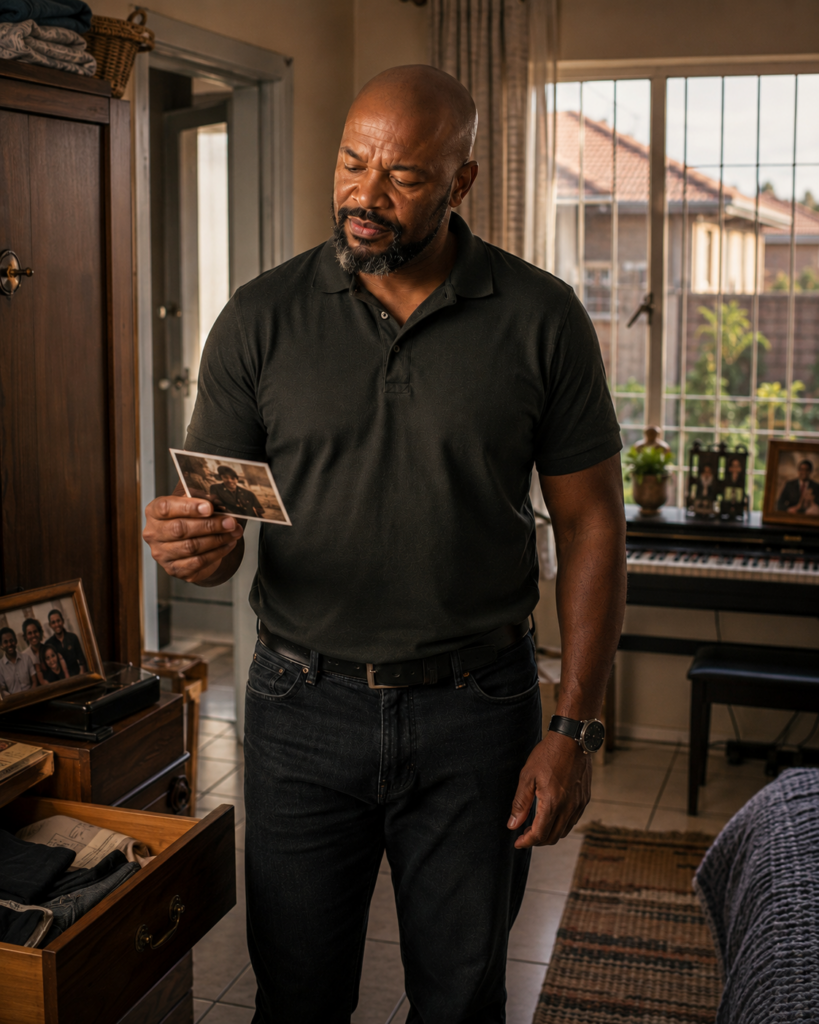
The Man Behind Father had learnt something long before anybody called him Father.
A man solves problems.
And somewhere along the way…
he began believing that when the man couldn’t solve them, the house felt it.
Research into the provider role among South African men has similarly found that providing can become deeply connected to masculine identity and self-worth. When the ability to provide becomes uncertain, the pressure does not always remain financial. It can become personal… explored further in research on the psychological burden of the male provider role.
Nobody necessarily sat him down and taught him that lesson. He had simply lived long enough to watch what happened when problems were solved…
and what happened when they weren’t.
Maybe he even made himself a promise.
That one day, when people depended on him…
he would have better answers. Better resources. More wins than losses.
And in many ways…
the Man Behind Father lived up to his word.
His children attended school. The home they lived in was an upgrade from the one he once knew.
Problems came…
and somehow, he usually found a way through them.
He was proud of that.
Until life sharpened the knife…
and placed something in front of him that he knew nothing about.
Something experience had never prepared him for.
Maybe there were people who could’ve helped him carry it. Maybe there were answers somewhere outside that house.
But inside…
everyone was already accustomed to looking in his direction.
And for the first time…
the Man Behind Father didn’t know.
Something uncomfortable entered with that uncertainty.
Maybe insecurity dressed itself as wisdom. Maybe silence became an answer. Maybe his voice became harder than the question required.
And perhaps that’s when anger entered the house.
Not because the man suddenly stopped loving the people inside it…
but because somewhere underneath Father…
a question had started following him from room to room.
Who am I if I can’t solve problems?
The Parts The Man Behind Father Stopped Bringing Home
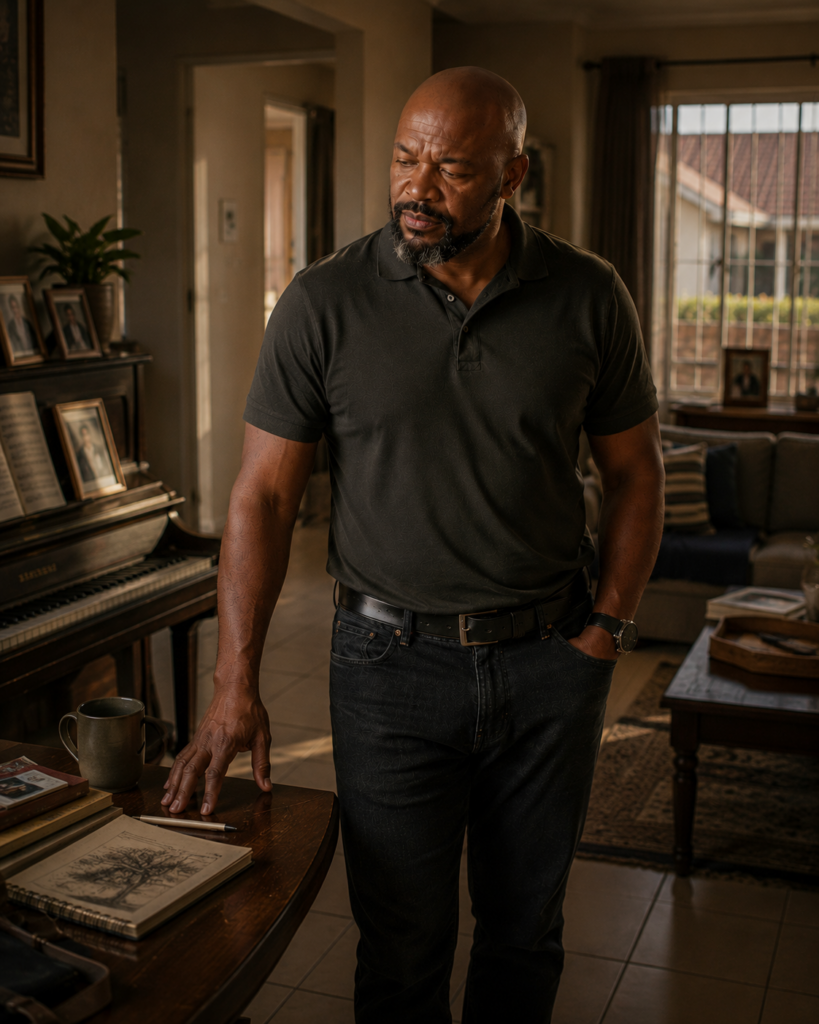
The parts the Man Behind Father stopped bringing home…
no one could point to the exact date they disappeared.
It had happened so slowly that even Father couldn’t remember when it started.
But he had his reasons.
The man who once sat down and helped the children with their homework had slowly become the person who wanted less and less to do with it.
His reasoning was simple.
“My father never helped me with homework and I turned out fine.”
Looking back now, I realise some of the rules Father carried into the house had existed long before his own children arrived. They came from what he had watched, survived and eventually accepted as normal in the man who raised him. Not everything inherited arrives as advice. Sometimes it arrives as a standard we never realise we are repeating… explored deeper in What My Father Passed Down.
Or:
“You’re grown now. You don’t need my help.”
Father still loved his family. That had not changed.
But something inside the man had.
The world continued evolving. The children became older. The problems became different.
And slowly…
some of the methods that had made him the solver for so many years stopped working on the problems standing in front of him today.
For the first time, experience did not automatically produce an answer.
And somewhere inside himself, the man created a logic he never shared with anyone.
If I don’t know how to solve it…
what exactly am I offering?
So he offered less.
Not only answers.
Parts of himself.
From the outside…
he still went to work. Still carried responsibility. Still stood among other men with respect attached to his name. Still returned home.
But when the friends were gone…
and he found himself standing on the welcome mat again…
something inside him changed.
The same door. The same house. The same people he loved behind it.
And once again…
he took that last breath.
Looking back now, I realise returning home did not always mean every part of Father returned with him. Sometimes the distance between the man and the role appeared before anybody inside the house knew there was something to notice. And eventually, there were evenings when even Father’s familiar arrival stopped happening exactly as expected. The house waited while somewhere between work and home, Father began making a different turn… explored deeper in The Place Father Kept Returning.
Because perhaps Father had spent so many years being the solver…
that somewhere along the way, the man had stopped knowing what to bring into the room when he didn’t have a solution.
And beneath all the explanations…
all the reasons…
all the things he told himself…
one question remained.
A question he would probably never say around the men who respected him.
If I can’t solve problems…
does that mean I’m still the man I thought I was?
But sometimes life doesn’t leave that question inside the man. Sometimes it follows him into an ordinary room, sits him among other men and waits until somebody asks him something he has always believed Father should know how to answer. What happens when the answer simply doesn’t come?… explored deeper in The Day Father Had No Answer.
When Father Became Easier to Recognise
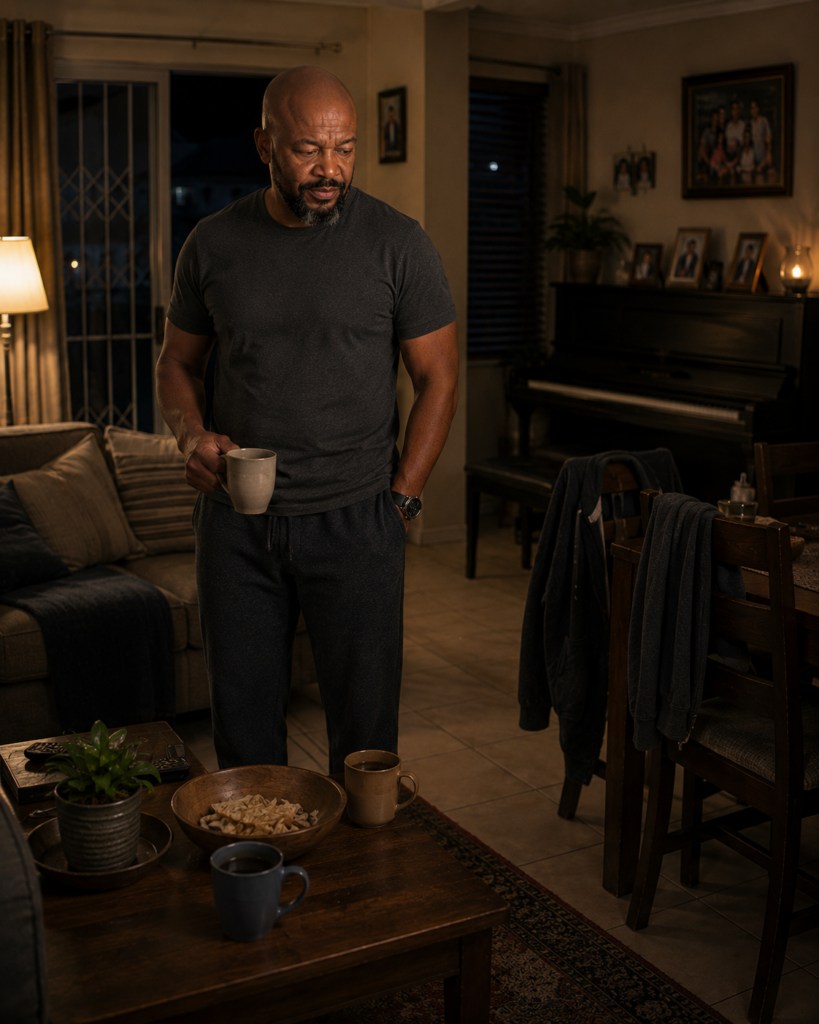
When the man behind Father found himself alone for a weekend, during the holidays as the family enjoyed themselves while he had to stay behind for work…
something in that silence moved inside him.
As if it was calling for him to remember, while age continued moving and the minutes kept ticking.
The first time that voice appeared somewhere deep in his mind, he ignored it with what he justified as a brilliant gesture:
Let me call my friends and have a men’s conference.
So he called all of them.
The man behind Father didn’t call and say, “There’s something about this silence that bothers me.”
He called and said, “I miss hanging out. Come through, let’s have fun.”
So they did.
For a few hours, the house was alive again.
Then his friends returned to their families…
and he returned to an empty home where the silence announced its presence again.
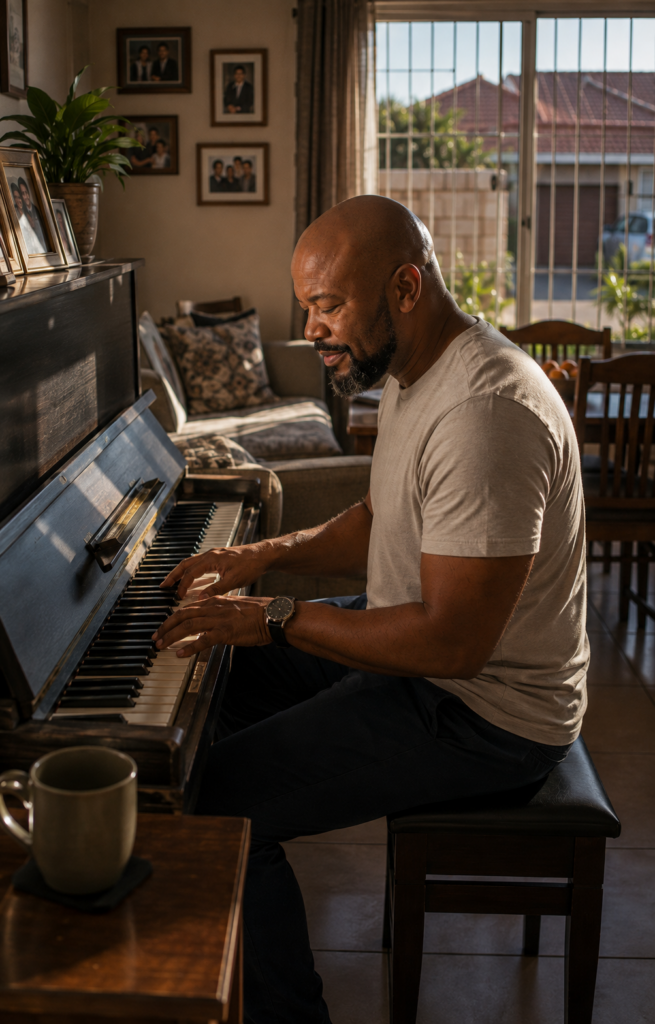
The man behind Father looked through an old photo album and saw a version of himself.
That version shined a mirror towards him.
A version before the marriage. Before the children.
A version that used to love playing the piano.
Even in that discomfort, Father smiled as he closed the album.
“Those were indeed the good times.”
Then another thought followed:
Once I solve my current problems, I must return to doing what I love.
And just like that…
the family returned.
The married version returned. Father returned. The problem solver returned.
The piano player didn’t.
Looking back now, I realise the piano was never only about music. It represented a future version of himself he kept promising he would return to once life became easier. But every solved problem created another responsibility, and every responsibility gave him another reason to wait. Somewhere between providing for everyone else and preparing for a better time, the promise quietly became something he stopped noticing… explored deeper in The Promise You Forgot You Made.
Conclusion: The Man Behind Father
The man behind Father eventually returns home.
The gate closes behind him.
Maybe one child runs towards him with something they want to show him. Another has a problem they believe only Father can solve.
The senior voice has something waiting that needs his attention.
And just like he has done countless times before…
the man enters.
He listens. He provides. He corrects. He protects.
He finds a way forward even when the road ahead doesn’t look clear.
Because somewhere along the way, being needed became part of how the man knew he was doing his job.
Looking back now, I realise being needed can quietly become more than responsibility. When one version of you receives appreciation, dependence and love often enough, you can begin bringing that version everywhere without noticing what stays behind. Eventually, the role no longer feels like something you perform. It feels like who you are… explored deeper in The Love You Started Performing.
And perhaps there was nothing wrong with that.
Maybe those sacrifices are the reason the children went to better schools than he did. Maybe they are the reason the house they live in looks different from the one he grew up in.
Maybe the problems his father couldn’t solve became the very problems he promised his own children would never have to carry.
And maybe he kept that promise.
Looking back now, I realise some of Father’s identity may have become attached not only to the people who needed him… but to the life those years of providing had helped build. The home. The family. The responsibilities. The things that quietly became evidence that all those sacrifices had meant something. And perhaps you only discover how much of yourself became attached to that life when the things surrounding it begin changing… explored deeper in The Man Who Lost Everything.
But promises have a strange way of hiding what they cost.
Because after years of becoming the person everyone could depend on…
the man behind Father became harder to find.
Not because he disappeared.
He was there.
At work. At the gate. At the dinner table. At school meetings.
Inside every problem that needed a solution.
He was there.
But maybe the version who once sat behind a piano was still waiting for the problems to end.
Maybe there were other versions too.
Versions nobody remembered because Father had become so convincing.
Even to himself.
Looking back now, I realise Father had not replaced the man in one dramatic moment. He had been built through thousands of ordinary ones. Every problem solved, every responsibility carried and every part of himself postponed quietly strengthened the identity standing in the room. Eventually, he was no longer only playing the role. He was meeting the person those years had created… explored deeper in The Person You Keep Becoming.
So when the house finally became quiet…
and everyone went to sleep knowing Father was there…
perhaps nobody noticed that somewhere underneath the provider, the protector, the guide and the problem solver…
there was still a man.
A man who existed before anybody depended on him.
A man who once had things he loved that solved absolutely nothing.
And maybe that is what makes the question uncomfortable.
Because everybody knew when Father came home.
They heard the gate. They saw him walk through the door. They knew exactly who had arrived.
But somewhere between becoming the man everybody needed…
and spending years being that man…
who continued noticing the man behind Father?
Mpumelelo Ncwana writes about the psychology behind decisions, identity, and the systems that shape behaviour.
[…] Most people around Father had learnt to recognise the role long before they ever stopped to wonder about the man carrying it. The quieter distance between those two versions is explored deeper in The Man Behind Father. […]
[…] Looking back now, perhaps that was what made the conversation feel different. For a few minutes, nobody needed Father to solve anything. Nobody needed an answer, a decision or a way forward. He could simply talk about the person he had been before so much of his life became responsibility. Maybe Baba G had not suddenly appeared in that restaurant. Maybe he had always been there… somewhere underneath the man everyone had learnt to call Father… explored deeper in The Man Behind Father. […]
[…] Looking back now, perhaps this was one of the ordinary moments where the man and Father became harder to separate. He was no longer only the boy with plans of his own. He was someone’s partner. Someone’s provider. Someone his children looked towards when they wanted something tomorrow. And the more naturally he carried those roles, the easier it became for everyone… including himself… to know Father better than the man underneath… explored deeper in The Man Behind Father. […]