
When Mother Was A Daughter
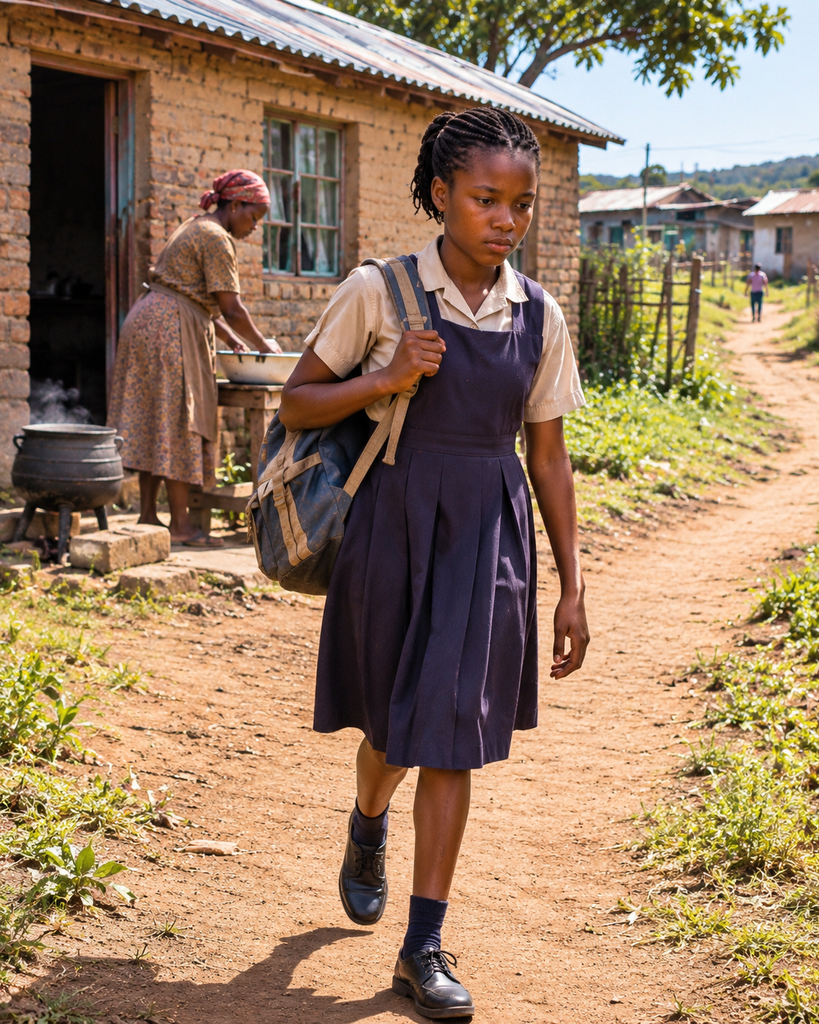
When Mother was a daughter… she never imagined the world we live in today.
A world where her own children would have opportunities beyond her wildest imagination.
Mother grew up in a small village. And for many people who lived in that village… the world outside was something they knew very little about.
There was no social media. No easy way to see how people in other parts of the world lived. And for many… the village was almost the entire world they knew.
Mother grew up knowing very little about life beyond her community. And for some of her peers… that limited world would become the only life they knew.
Because in that village… education didn’t always come first. What mattered most was making sure the household chores were completed.
Before Mother could leave for school… she had responsibilities waiting for her.
She would wake up early. Sweep the house. Mop the floors. And then polish them.
Once that was done… she would go outside.
There was a three-legged cast-iron pot. A potjie pot.
She would heat water in it. Pour some of the hot water into a bucket… and prepare water for bathing.
Then she would refill the pot so that her own mother could have hot water available during the day. Whether for cooking. Bathing. Or whatever else the household needed.
And it wasn’t only her. In that house… every child had responsibilities. Responsibilities that had to be completed before anybody could leave for school.
And when Mother finally finished hers… she would prepare to leave.
Sometimes… with an empty stomach.
Then begin the long walk to school.
Because even after completing everything that was expected of her at home… she still had an education to pursue.
The Woman Who Raised Her
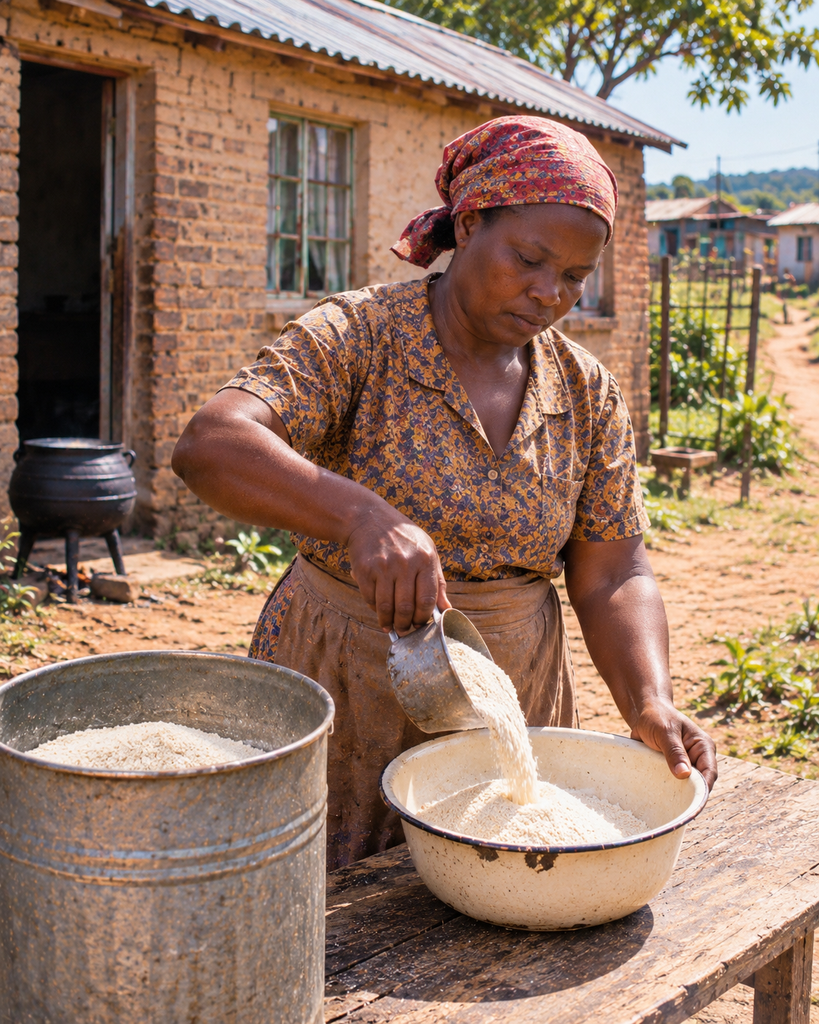
The woman who raised Mother… when Mother was still a daughter… was a professional in survival.
When she was young… she never had the opportunity to complete her education. She had to drop out of school.
And help her family by doing what, at that time, was considered a woman’s responsibility.
Cleaning. Cooking. And taking care of the elders.
Those were the skills she grew up learning.
And as the years continued… the same young girl eventually became a mother herself. Raising many children.
With a husband who worked long hours… but earned very little.
And with everything she had learned over the years… she knew how to survive.
Think about it.
In today’s world… imagine trying to raise five children with only R1,000.
How would you divide that money? How many meals could you prepare?
What would you buy first? What would have to wait?
For the woman who raised Mother… these weren’t simply questions. They were decisions she had learned to make.
How to divide the little money available. How to make food last. How many meals the household could afford.
How to collect and prepare water using the methods available to them.
And somehow… still make sure her children went to school.
Something she herself had never managed to finish. A wound she had carried since childhood.
And perhaps… one that influenced how she raised her own children.
Because when she disciplined them… sometimes taking it further than she should have… she didn’t necessarily see herself as hurting them.
In her mind… she was preparing them. Preparing them for a world she had come to understand as unforgiving.
And when the children left for school… her day continued.
Sometimes she would climb the surrounding mountains… searching for plants traditionally used as medicine.
Plants she would later prepare whenever somebody in the family became sick.
Other days… she would gather ingredients to brew traditional South African beer. Beer she could sell to people in the community.
Bringing additional money into the household.
She also joined stokvels with other women. Contributing what she could.
Knowing that when her turn came… the money could help the family.
And between all of that… there was still washing. Cooking. Cleaning. And looking after the household.
The same household her children had helped prepare before leaving for school.
The woman who raised Mother knew the value of things.
The value of food. Water. Money. And the importance of making the little they had last.
And she expected her children to learn those same lessons.
So when a child refused to listen… or made a mistake… she would punish them.
Sometimes firmly. And sometimes… perhaps more harshly than the situation required.
And perhaps the consequences of those methods reached further than the moment itself. Research into childhood discipline has found that physical punishment can affect children long after the punishment ends… including how they understand aggression and authority. The World Health Organization has examined these risks in its research on corporal punishment and children’s health.
But in her understanding of motherhood… she wasn’t simply raising children who would listen to her.
She believed she was preparing them for a world that would not always be kind to them.
When Their Worlds Met
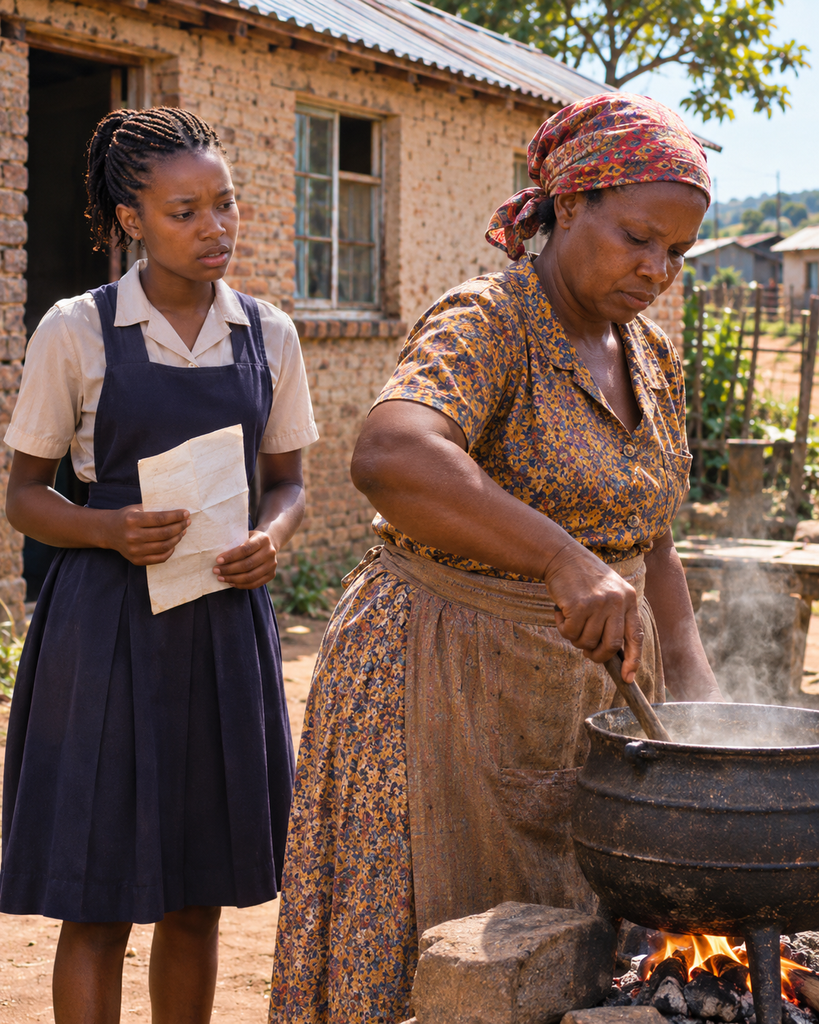
When Mother was still a daughter… she returned home from school one afternoon.
Excited.
She ran straight to her father. Showing him her school results.
Her father looked at them… smiled… and said:
“My daughter, I’m proud of you.”
The daughter smiled. Then made her way towards the back of the house… where her mother was cooking outside.
“Mother! Look how much I got for my results! This means…”
But before she could finish… her mother interrupted.
“Daughter! You’re running around here screaming and shouting.”
“Instead of all that, why don’t you change out of your school uniform, go mop the kitchen and help your sibling clean up and wash the dishes?”
“Once you’re finished, you can come back and show me your school things.”
The daughter tried explaining.
“But Mother… that’s also why I wanted to show you.”
“I need to study before it gets dark.”
“We’re running out of candles, and I don’t want to finish the last one.”
“And I need to prepare for my test. This is one of the most important tests of my school year.”
She continued.
“That’s why I wanted to ask permission for my siblings to do my chores today, along with theirs, so I can study.”
Her mother looked at her.
“Young lady…”
“You know your brothers are already busy with the tasks I’ve given them.”
“I need everything in order.”
“So go and do your chores if you want to eat tonight.”
“There’s no way this household won’t eat on time simply because you need to study.”
She continued.
“You should be grateful.”
“During my time, I was never given candles to study with.”
“At least you have one.”
“Use the one that’s almost finished. Leave the new ones.”
Then came the final instruction.
“Now go on and stop wasting my time.”
“Because if I have to come and do those chores myself…”
“I’ll show you your maker.”
“This is my house, and you’re still a child.”
The daughter stood there.
For a moment… she wanted to say something. But her mother had already returned her attention to the cooking.
And as the daughter walked away… the woman who raised her thought to herself…
This child.
Who does she think she is to question my authority?
But those words weren’t new to her.
Many years earlier… when she herself was still a daughter… she had heard similar words.
She remembered one particular day.
While preparing pap… she had accidentally spilled some onto the stove.
And for wasting food… she was punished.
That evening… she wasn’t allowed to eat.
A lesson she had carried with her for years.
And now… without necessarily recognising it… the woman who raised Mother was speaking to her own daughter in a way she had once experienced herself.
Meanwhile… the daughter had something she wanted to say.
Something that had been sitting inside her since her mother interrupted her.
At the beginning of the year… you told us we must pass.
That we must do well in school.
And that if we didn’t take our education seriously, you would make us drop out.
But now… when I’m asking for time to study… you’re telling me to do my chores.
She wanted to ask her mother why.
But she knew what could happen.
A wet cloth could meet her skin. Or she could go to bed without food.
Not because there wasn’t any… but because she hadn’t completed the work expected of her.
So the daughter kept quiet.
She walked away… carrying the same school results her father had celebrated.
And somewhere between her mother’s words… and everything she had wanted to say… she began convincing herself.
Maybe Mother is right.
Maybe I’m the one who doesn’t listen.
And just like that… the girl who had arrived home excited about her achievements… was no longer thinking about what she had accomplished.
She was thinking about what she had done wrong.
Even though all she had asked for… was time to study.
When Mother Was A Daughter She Learned to Keep Quiet
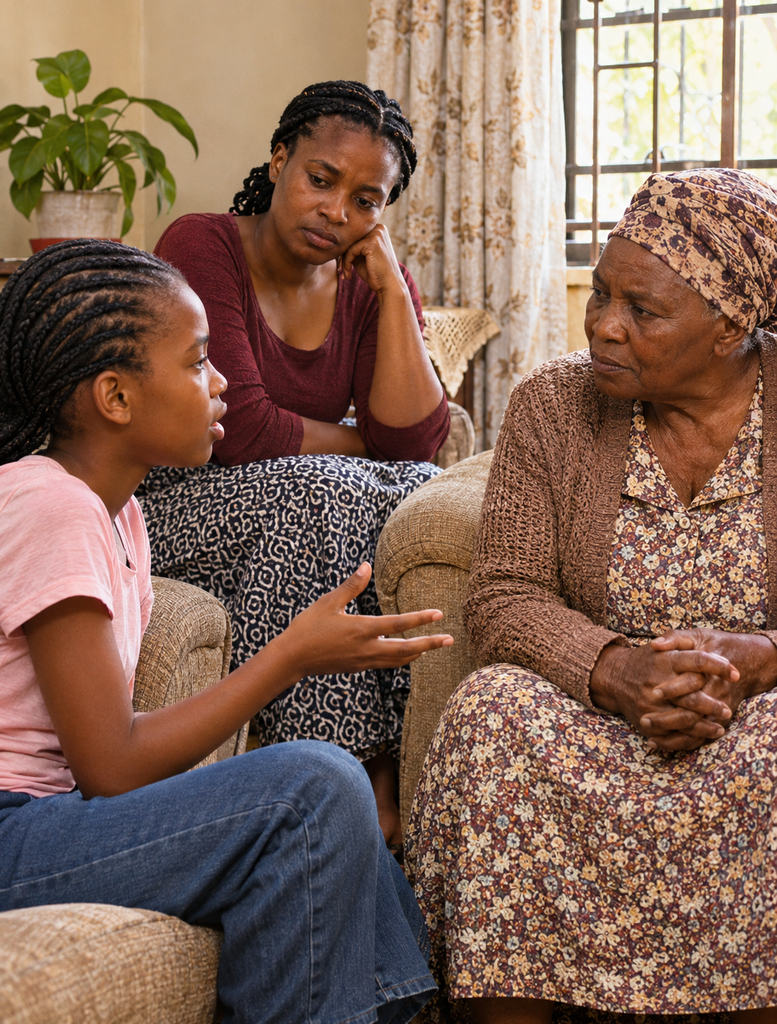
When Mother was a daughter… silence slowly became her companion.
Many moons passed.
The young girl grew older.
Looking back now, I realise how easily we can forget that the people we know as Mother once had lives we never witnessed. They were daughters first. Young women with their own dreams… their own understanding of the world… and futures they imagined before anybody called them Mother. Not every woman arrived at motherhood through the same experiences. But each had a life before the role became part of her identity… a different woman’s story explored deeper in Before They Called Her Mother.
And eventually… she found herself raising a family of her own.
A mother. The authority in her own household.
But the children she was raising were growing up in a world very different from the village she once knew.
They had access to the internet. Different ideas. Different opportunities. And different ways of understanding the world around them.
They were growing up in a generation where children were encouraged to express themselves.
To ask questions. To have opinions.
And sometimes… those opinions didn’t agree with Mother’s.
That’s when something familiar began happening.
Whenever Mother gave instructions that her children disagreed with… they would question her.
They wanted to explain their own understanding. Their own reasons.
And sometimes… why they believed there was another way of doing things.
But Mother wasn’t used to that.
When she was a daughter… questioning an adult was something she had learned to avoid.
So when her own children questioned her… she sometimes understood it as disrespect.
Because in her time… a child listened.
And that was that.
But there was something different about Mother.
She didn’t punish her children by denying them food.
She didn’t use the same harsh methods she had experienced growing up.
She couldn’t bring herself to do those things.
And besides… times had changed.
Yet whenever her children refused to follow her instructions… she sometimes wondered whether she was failing as a mother.
Because the children she was raising weren’t responding the way she had been taught children should respond.
And eventually… she called the one person she believed could help.
Her own mother. The children’s grandmother.
The woman who had raised her.
The woman who had taught her almost everything she knew about discipline and responsibility.
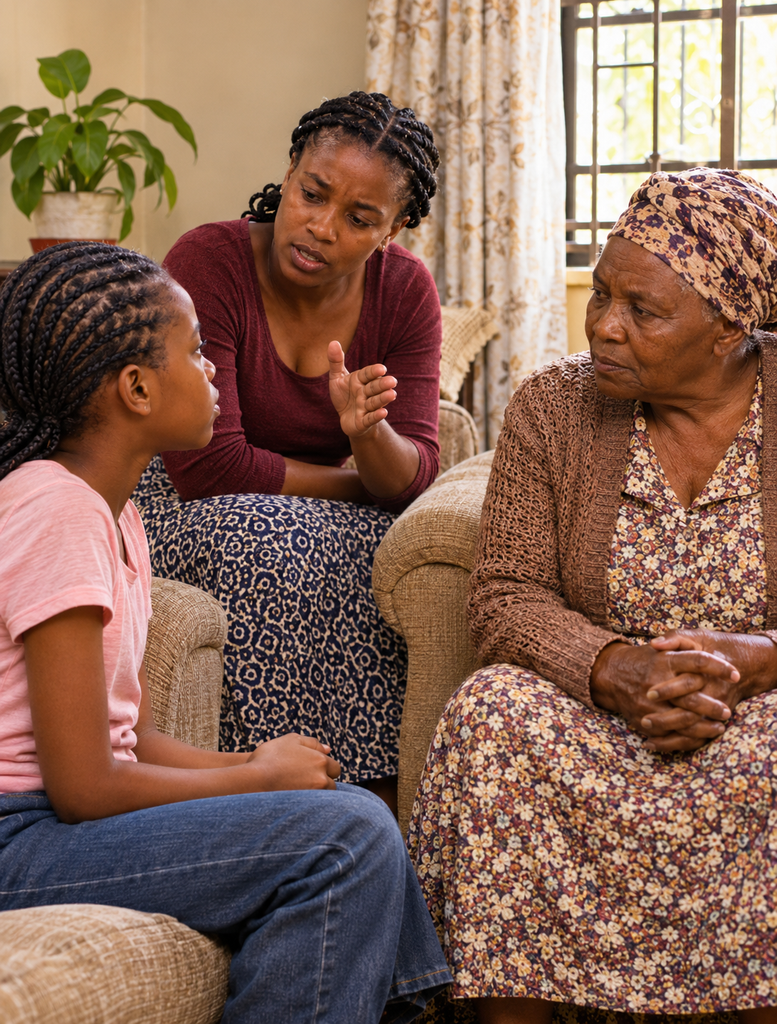
And when Grandmother began speaking to the children… something happened.
The children listened.
But they also spoke.
They explained their opinions. What they believed was best for them.
And why they didn’t always agree with the way Mother wanted things done.
For a few seconds… Mother listened.
And something moved inside her.
Because as she heard her own child speaking to Grandmother… she remembered another child.
Many years ago.
A young girl returning home from school.
Excited.
Holding her results.
A girl whose father had smiled and told her how proud he was.
A girl who had approached her mother with that same excitement… only to be told to complete her chores.
She remembered wanting to ask a question.
Why was she expected to excel at school… but denied the time she needed to prepare?
She remembered the words she had wanted to say.
And how she had swallowed them.
Not because she didn’t have an answer.
But because she knew what speaking could cost her.
For a brief moment… Mother remembered that girl.
Then… she returned to the conversation.
Her child was still explaining.
And Mother interrupted.
“That’s enough!”
“You don’t speak to an adult like that.”
“When an elder is speaking, you listen.”
Not necessarily because her child was wrong.
But because in Mother’s understanding… there was a way children were supposed to behave.
And questioning an adult wasn’t one of them.
The woman who had once been silenced for asking a question… was now stopping her own child from finishing one.
And perhaps… she didn’t even realise what had just happened.
Conclusion: When Mother Was A Daughter
When Mother was a daughter… she learned many things from the woman who raised her.
How to cook. How to clean. How to make the little money available last.
How to take care of a household. And how to survive when life offered very little.
Those lessons stayed with her.
And as she grew older… some of them helped her build the life she eventually gave her own children.
But there were other lessons too.
Lessons that weren’t always taught through words.
Sometimes… they came through punishment.
Through fear. Through knowing when to speak. And when to keep quiet.
Mother had grown up.
She had a family of her own. Children who had opportunities she once could only imagine.
Children who didn’t have to experience every hardship she had experienced.
And in many ways… she had given them a different childhood.
But there was something she hadn’t entirely left behind.
The belief that a good child was a child who listened.
Even when that child had something reasonable to say.
And perhaps that was why… when her own children started questioning her… she struggled to understand them.
Because the same behaviour she had once been afraid to show… was now appearing in the children she was raising.
The difference was… her children didn’t always remain silent.
And when they spoke… Mother sometimes heard disrespect.
Where there might also have been a child trying to explain themselves.
Just as she once had.
And somewhere in that moment… there were three generations.
A grandmother who had learned that survival required discipline.
A mother who had learned that questioning authority could bring punishment.
And children growing up in a world where they were encouraged to have voices of their own.
Each living with a different understanding of what it meant to be respectful.
But perhaps the most interesting part wasn’t that Mother had changed some of the ways she raised her children.
She had.
She no longer punished them the way she had been punished.
Yet when her child began speaking… she still reached for the same words that had once stopped her.
And as the conversation continued… Mother remained convinced she was teaching her child respect.
Just as her own mother had taught her.
But the little girl who once came home carrying her school results… was still somewhere inside the woman who had just told her own child to keep quiet.
Mpumelelo Ncwana writes about the psychology behind decisions, identity, and the systems that shape behaviour.