
The Streets I Grew Up In: Same Infrastructure. Different Environments.
The Streets I Grew Up In:
We don’t get to choose where we come from… where we were raised… and the environments we were raised in.
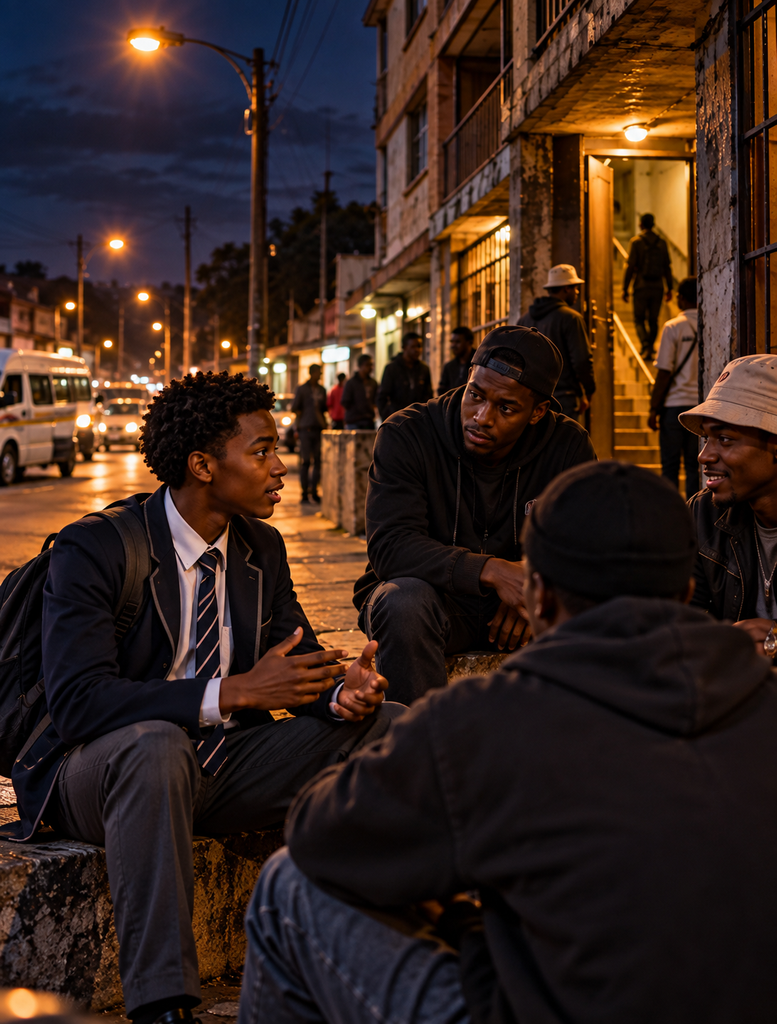
Yes… I’m the private school child who hung around with gangsters.
If I could take a pen and rewrite my past… I wouldn’t.
My community has two sides.
Most people belong to and only know the daytime community… when the sun is still shining.
Then there are boys like me… and many others… who have seen the dark side of my community.
Same infrastructure.
Different environments.
One misconception about the dark side of a community is believing that it abides by the laws of your parents… your family… your culture… or anything else you were taught growing up.
How naive… it whispered to me.
I came with the principles I had learned in private school and at home.
Treat others as you would like to be treated.
Looking back now, perhaps I had already learned how to exist between environments before I understood what that meant. There was the world that shaped the principles I carried… and another world beginning to teach me which of those principles worked differently once I crossed into it. For a while, both versions could exist inside the same child without him questioning the distance between them… explored deeper in Living Between Worlds.
And… always tell the truth because the truth sets you free.
Well… in the dark, the truth doesn’t always set you free.
Sometimes it makes you an open book.
And once you become an open book… invisible, harmless-looking strings can begin pulling you without you even knowing.
But not forever.
There comes a day when you realise… just how much those invisible strings have taken from you.
When the Dark Welcomed Me
The dark side teaches its lessons through pain.
And if the player doesn’t learn from that pain the first time… the dark repeats the same pain over and over again.
In the dark… you will experience betrayal like you’ve never experienced before.
And while you’re treating people as you wish to be treated… the other players of the dark don’t necessarily care about treating you the way you treat them.
They’re more interested in you.
Are you an easy target or not?
My first experience with the dark was when I first walked into a building.
The stairs curled as we climbed… graffiti filled the walls, matching the aesthetic of the place.
For the very first time in my life… I witnessed the prostitution business happening right before my eyes.
I continued climbing the stairs.
Eventually, we made it to the door.
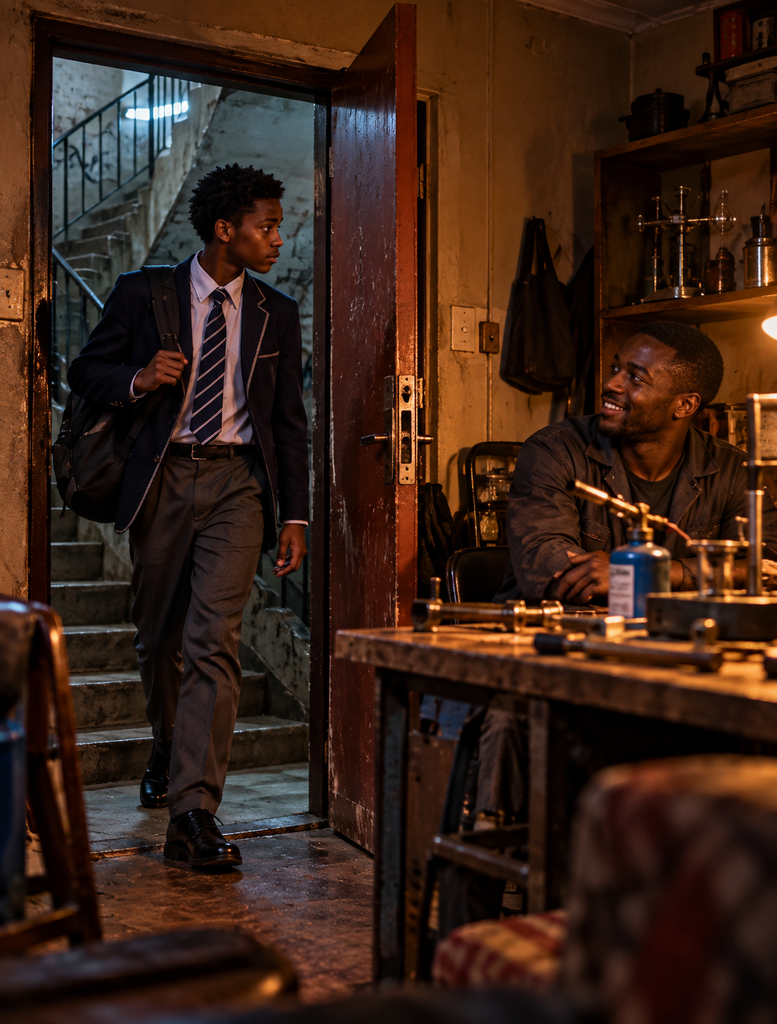
And there… was my first encounter with a gangster.
I walked in.
He smiled.
I handled my business with him.
Then afterwards… we hung around.
As I got to know him, I stopped seeing the gangster.
I started seeing the man behind the mask.
And because I rapped… we eventually started freestyling together.
There he was… working with a blowtorch, making science instruments.
And there I was… a private school kid… experiencing the beginning of a world I had never seen before.
The dark side had welcomed me.
When the Dark Became Normal
Exam season ended.
I was somewhere around Grade 9 or 10.
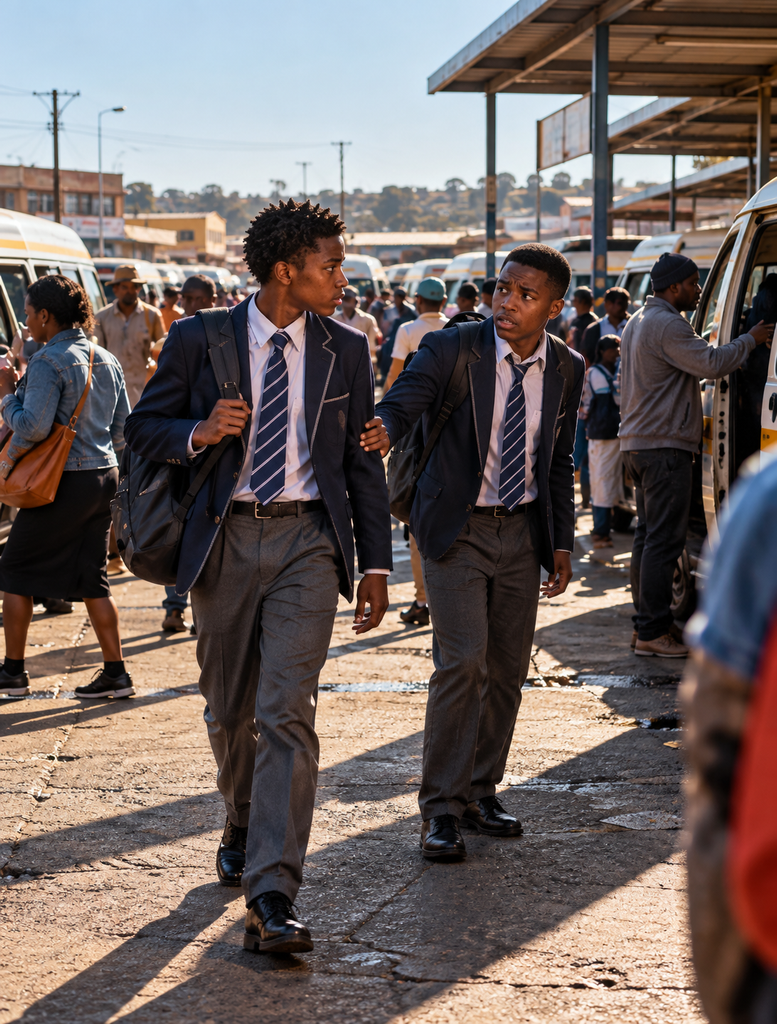
One afternoon, one of my boys and I walked from school towards the taxi rank.
He was cool. Confident. The type of person you wouldn’t immediately think was afraid of much.
When we entered the taxi rank, I showed him where he needed to go.
“Ask those gentlemen there. They’ll show you which taxi to take.”
I was about to make a right and leave.
Then he called me back.
“Please accompany me.”
I looked at him.
“I don’t feel safe here.”
For the first time… I realised how differently the two of us experienced the same environment.
That was probably the first time I had seen him vulnerable.
The noise. The people moving everywhere. Taxi drivers calling out destinations. People standing around.
The busyness of the taxi rank alone was enough to shatter the mask.
Part of me understood why.
But another part of me thought… he wouldn’t survive a day in the dark side.
Not because I was stronger than him.
Maybe I had simply become familiar with things he hadn’t needed to become familiar with.
And perhaps that’s one of the strangest things about environments.
Looking back now, I realise familiarity can hide more than fear. When something surrounds you long enough, you don’t always notice the moment you stop reacting to it. What once required adjustment can quietly become the standard your mind stops questioning… and eventually you may continue inside a pattern without realising it became one… explored deeper in Why You Stay Stuck Unaware.
What feels dangerous to one child… can eventually start feeling normal to another.
The dark isn’t always the reason families break.
Sometimes… the dark only offers a second home.
The child who wants to break away from the family script but can’t because of generational pressure… the dark doesn’t create that pressure.
It doesn’t sit beside the child and scream with them.
It simply shows them another door.
The child who doesn’t feel understood at home… another door.
The child looking for belonging… another door.
The child looking for money… another door.
The child looking for somewhere they can become somebody else… another door.
Looking back now, perhaps that is what makes belonging complicated. Sometimes the environment doesn’t ask you to become someone new all at once. It simply gives certain versions of you somewhere to belong. And when one version keeps receiving recognition, protection or acceptance… you may slowly become more of whoever that environment has room for… explored deeper in The Version They Needed.
And the dark doesn’t always drag them through it.
Sometimes… it only leaves the door open. The Streets I Grew Up In
When Rent Became Due
For some… the dark eventually becomes their only home.
And somewhere along the way… the player and the dark sign an invisible contract.
No paper. No pen. No signature.
Nobody sits the player down and explains the terms and conditions.
At first… the dark might not even ask for anything.
It gives.
A place to belong.
People who understand your language.
A way to make money.
A reputation.
Protection.
Maybe even a version of yourself that feels more powerful than the one you were before you entered.
Looking back now, I realise that reputation can become one of the quietest things an environment gives a person. At first… it might feel like nothing more than being noticed. People recognising your name. Older boys treating you differently. A feeling that you finally matter somewhere. But when that recognition begins shaping the choices you make… the person you were before it can slowly become harder to recognise. Not because you woke up wanting to become somebody else… but because being somebody in that environment started feeling more important than the dreams you once carried… explored deeper in Before They Called Him Trouble.
So the player stays.
One night becomes another.
The faces become familiar. The streets become easier to read.
Things that once made the player uncomfortable… slowly become normal.
And without realising it… the player stops feeling like a guest.
The dark starts feeling like home.
But the contract was never free.
Eventually… rent is due.
Not the type of rent you pay at the end of every month.
The dark collects differently.
Sometimes it wants your time.
Sometimes your freedom.
Sometimes your relationships.
Sometimes your reputation.
Sometimes your ability to sleep peacefully at night.
And sometimes… it wants you to become somebody you never imagined yourself becoming.
Looking back now, perhaps becoming that person would never have felt like one decision. There was no morning where the player simply woke up as somebody else. It happened through smaller adjustments… what became acceptable, what stopped feeling strange, what survival seemed to require and what the environment kept rewarding. Until eventually, the person walking those streets was carrying versions of himself he never consciously chose to build… explored deeper in The Person You Keep Becoming.
That’s the strange thing about the rent.
The player doesn’t always know they’re paying it.
They might call it survival.
They might call it making a plan.
They might call it doing what needs to be done.
They might even call it normal.
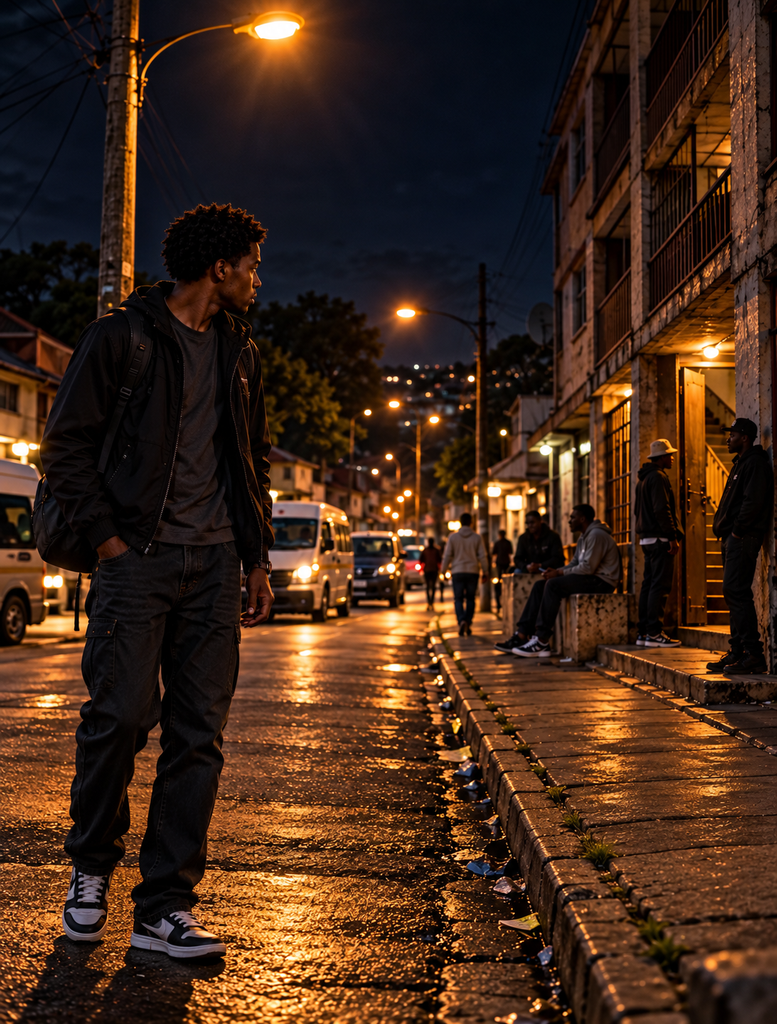
Until one night… the player is walking streets they once feared.
Scanning faces.
Looking for the next opportunity.
The next target.
The next way to survive another night.
And perhaps that’s when the invisible contract becomes visible.
The dark gave the player somewhere to belong… but somewhere along the way… belonging started costing them pieces of themselves.
And once the dark becomes the only home the player believes they have… leaving can start feeling more expensive than staying.
So the player stays.
And the rent keeps coming.
Conclusion: The Streets I Grew Up In
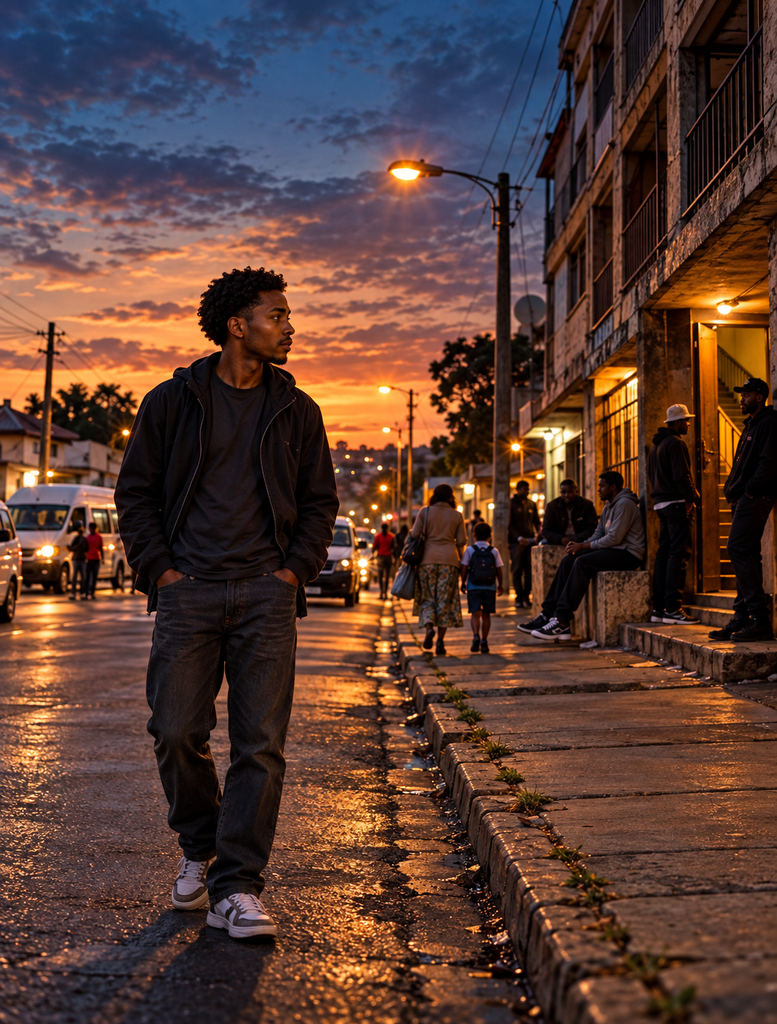
Today… I can look back at the streets I grew up in differently.
Not because I suddenly understand everything that happened there.
I don’t.
And not because everything the dark taught me was worth learning.
It wasn’t.
Some lessons came with pain. Some came with betrayal. Some took things from me before I even realised I was paying for them.
But if you gave me that pen again… I still wouldn’t rewrite my past.
Because somewhere between the private school child… the principles I carried from home… and the boy who eventually learned that another world existed after the sun went down… I started seeing people differently.
I learned that the person everybody calls a gangster can still have a man behind the mask.
I learned that the confident boy beside you can become afraid when the environment changes.
I learned that what feels dangerous to one child… can become normal to another.
And I learned that the dark doesn’t always need to come looking for you.
Sometimes… something in the light has already made another door attractive.
Looking back now, I realise I didn’t recognise those doors as doors when they first opened. They looked like friendship. Music. Studios. People who knew people. Places where Puff could walk in and feel recognised. Nothing about it felt like moving towards something called the dark. From where I was standing… my world was simply getting bigger… explored deeper in Before I Knew It Was the Dark.
That doesn’t make everything that happens in the dark right.
It doesn’t remove responsibility from the people who hurt others.
And it doesn’t turn pain into something beautiful simply because somebody survived it.
The dark is still the dark.
But I know now that it has faces.
Stories. Families. Children.
People looking for money.
People looking for belonging.
People looking for somewhere to become somebody else.
And people who stayed so long… they eventually forgot they were once guests.
Maybe that’s why I’m grateful.
Not grateful for everything that happened.
Not grateful for every lesson.
But grateful that I got to see both sides of the community that raised me. The Streets I Grew Up In
The one people knew while the sun was shining… and the one some of us met when it disappeared.
Same houses.
Same roads.
Same streetlights.
Same community.
Same infrastructure.
Different environments.
Mpumelelo Ncwana explores the moments, memories, and experiences that quietly shape who we become.
[…] Looking back now, I didn’t know how important that familiarity would eventually become. Moving between different environments had already taught me that the same child could feel at home in completely different worlds. Years later, that ability would follow me into streets and spaces that operated by rules very different from the ones I had learned at home and at private school. What first felt unfamiliar would not always remain unfamiliar… explored deeper in The Streets I Grew Up In. […]
[…] Looking back now, I realise normal has never meant the same thing in every environment. What feels unfamiliar, uncomfortable or even dangerous when you first enter a world can change after enough time inside it. The people become familiar. The language becomes easier to understand. The environment becomes easier to read. And sometimes… you only realise how much your definition of normal changed when you stand beside someone who never had to adapt to the same things… explored deeper in The Streets I Grew Up In. […]
[…] Looking back now, I realise some environments did more than give that version somewhere to appear. They gave it somewhere to belong. And once I spent enough time inside those worlds, things that would have once felt unfamiliar slowly became easier to understand. The people. The language. The rules nobody needed to explain. Eventually, I could move through environments that another version of me may once have looked at very differently… explored deeper in The Streets I Grew Up In. […]
[…] Looking back now, I realise the things that stop feeling strange are not always decisions we make alone. Sometimes an environment changes what feels ordinary simply by keeping us inside it long enough. The people become familiar. The rules become easier to read. Things that once caught your attention stop demanding it. And without one clear moment where you decided to change… you can become comfortable inside a world an earlier version of you would barely recognise… explored deeper in The Streets I Grew Up In. […]
[…] Looking back now, I realise familiarity can change the meaning of an environment too. A place does not have to be good for you to learn how to exist inside it. Stay long enough and you begin recognising the faces, understanding the language and reading rules nobody ever explained. What once made you uncomfortable can slowly stop feeling unusual… until one day you realise you are no longer experiencing the environment as a stranger… explored deeper in The Streets I Grew Up In. […]
[…] Looking back now, I realise the boy wasn’t simply changing his dreams. He was growing up in an environment that had already begun teaching him what recognition looked like. The older boys. The clothes they wore. The attention they received. The way certain names carried more weight than others. None of these things arrived as lessons. They were simply part of the world around him. And when a child spends enough time watching what his environment rewards… he can begin mistaking recognition for success without ever realising where that belief came from… explored deeper in The Streets I Grew Up In. […]