
The Man Who Knew Everyone
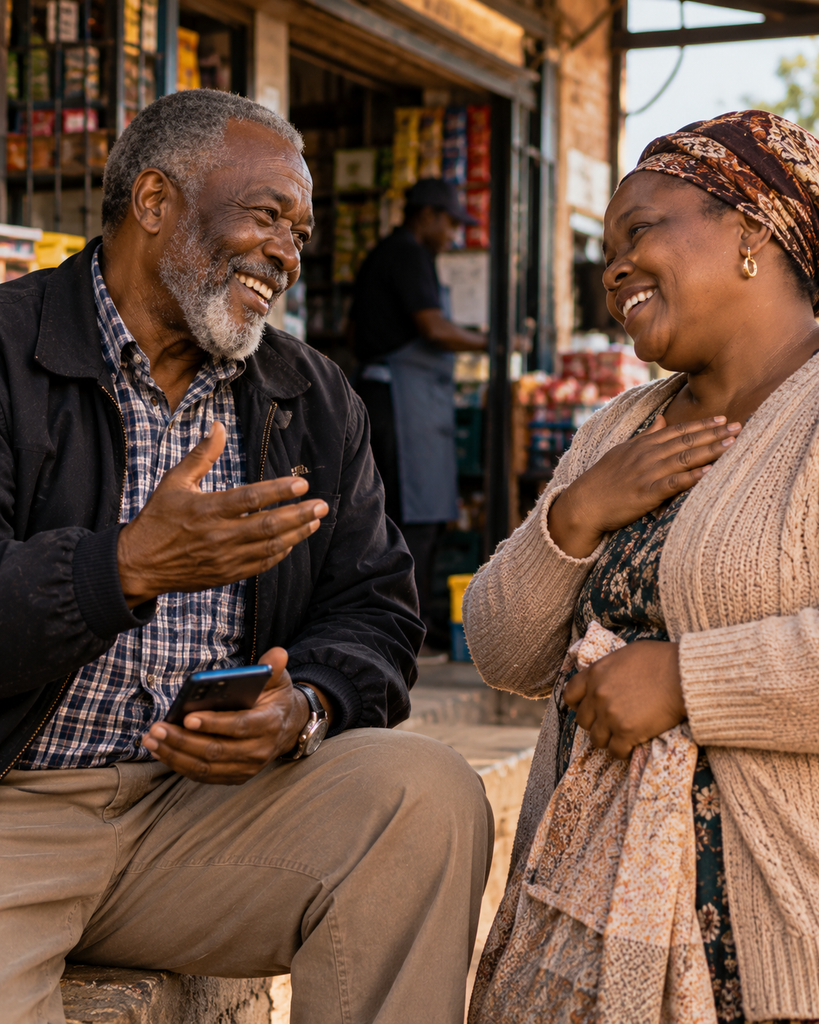
The man who knew everyone sat on an alcohol crate… after sharing one last laugh with the men he knew who operated a salon.
He had been sitting there for about 20 minutes… just catching up with them before heading out to where he had originally planned to go.
And as he got up to leave… one of the men said:
“Second half, Umkhulu.”
Not even a minute after the man who knew everyone left the salon… just before he made his way into the local store… another person called out to him.
“Umkhulu! Can you please organise men to come and help at Mama Grace’s this weekend?”
“We need help setting up tents, cutting wood and preparing the place so that the women’s section, where they’ll be cooking, is ready beforehand.”
“They need to start cooking throughout the night.”
The man who knew everyone intervened.
“Slow it down, Mama. Catch your breath before your high blood pressure goes up.”
He laughed.
“We’re way ahead of you.”
“I made calls to the men a few days ago, and we’re meeting this afternoon. They’ve also booked the community church.”
The relief on the woman’s face… said it all.
Umkhulu continued into the store. He was greeted by the store owners… and the cashiers.
He paid for the products his wife had asked him to buy.
And later that afternoon… just as he had promised… he met up with the men.
They discussed how they were going to make sure everything ran smoothly for Mama Grace’s ceremony… as she didn’t have enough help.
Later that night… the man who knew everyone returned home.
Ate supper prepared by his wife. Sat down. Watched the news.
And eventually… went off to sleep.
The Stories People Brought Him
The ceremony at Mama Grace’s house went smoothly.
The following week, on Wednesday… the man who knew everyone was invited by the principal of a local school in his community.
The school wanted him to address the youth on the coming Youth Day. To speak to the current generation… the future leaders of tomorrow.
The man who knew everyone accepted.
“Yes, Principal. I will be prepared to inspire the youth.”
As the two men discussed the time allocated for his speech, they eventually reached an agreement.
And before ending their conversation… the principal’s final words were:
“God bless, Umkhulu.”
Four days… Umkhulu thought to himself.
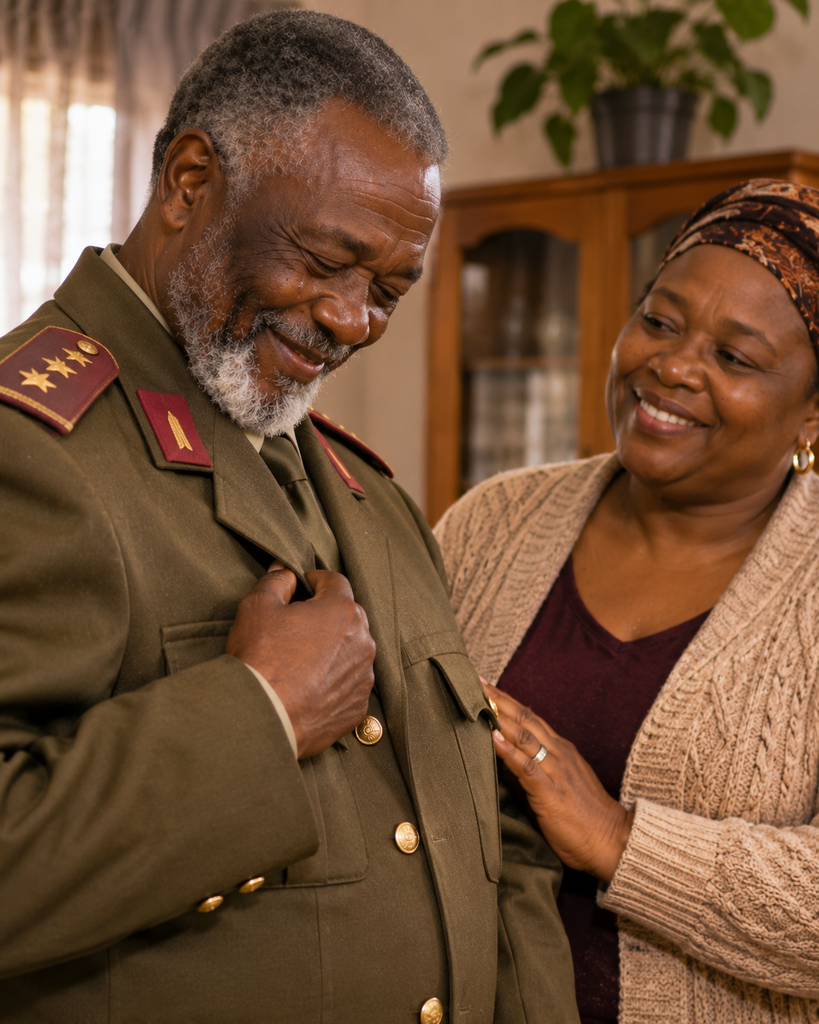
Later that day… his wife brought him something he hadn’t seen in years.
His old military uniform.
The three-star uniform of a Lieutenant General in the South African National Defence Force.
“Ahh, Indlovukazi!”
His wife smiled.
“Umkhulu, go to the school wearing this. Show those children how far you’ve come.”
They both smiled.
And the man who knew everyone… shed a tear.
Through the days leading up to the event… Umkhulu prepared his speech.
He thought about the young people he was going to address.
In his own words… the future of our country.
And eventually… Youth Day arrived.
As the school introduced him, the high school students began cheering.
Many of them already knew him.
And those who weren’t from the community… those who didn’t know who he was… were quickly educated by their fellow students.
“That’s Umkhulu!”
As he stood before the crowd… Umkhulu first addressed the uniform he was wearing.
“This man you see standing before you is much older than all of you.”
He smiled.
“Who here can tell me what this uniform represents?”
“And if you get it right… a full plate at Nelson’s is on me!”
The students began talking amongst themselves.
A guess from one side. Another guess from the other.
“No, no, no!”
Umkhulu giggled.
“This uniform I’m wearing represents the rank of a Lieutenant General.”
“When I served in the South African National Defence Force, I held a position of command over soldiers, both black and white.”
“When I walked into military headquarters, white colonels and major generals stood at attention and saluted me.”
“They respected my mind, my discipline and my strategic leadership.”
He looked at the students.
“But as I stand here today… retired from duty…”
“I didn’t start in this uniform.”
“On the 16th of June 1976, when I left my mother’s house…”
“I had no medals on my chest.”
“I couldn’t even afford a school tie like many of you are wearing today.”
He continued.
“I was around your age.”
“Fourteen… maybe sixteen years old.”
“Sitting in a crowded classroom…”
“Holding a broken pencil.”
“My generation grew up in a South Africa where black children were not given the same opportunities as white children.”
“And on that day in 1976… young people decided they had had enough.”
“They put down their schoolbags and took to the streets.”
“Some would later pick up rifles in the struggle against apartheid.”
“Not because they had forgotten about education…”
“But because they were fighting for a future where the next generation could have opportunities they were denied.”
The sacrifices Umkhulu spoke about were rooted in a defining chapter of South African history. On 16 June 1976, students in Soweto protested against apartheid education policies and the compulsory use of Afrikaans in schools. What began as a student-led protest became part of a wider struggle for equality and freedom… a history documented in the Soweto Uprising of 16 June 1976.
Umkhulu continued.
“And today…”
“I stand before you…”
“Looking at black and white children learning together in one country.”
“And for that… I’m glad.”
“But I want to challenge you.”
“Honour the sacrifices of 1976 not through warfare…”
“But through academic excellence.”
“Learn together.”
“Build together.”
“And use the opportunities available to you to build a united South Africa.”
The crowd cheered.
“Umkhulu! Umkhulu! Umkhulu!”
And as the man who knew everyone made his way out… the students continued cheering.
The Story He Thought He Knew
The man who knew everyone, along with other respected men in the community, had for years been the people others approached whenever problems arose.
Whether at home… or in the community.
They were the men people trusted to find solutions.
And for many years… their solutions worked.
The community was well looked after. The infrastructure remained in good condition.
Children went to school.
Some completed their studies and moved to the cities. Others dropped out and found work in the community.
And some completed their education but chose to remain… contributing towards the growth of the place they called home.
These were the principles Umkhulu and the other men had lived by.
Principles that had guided their generation… and continued shaping the community.
But as the years passed… things began changing.
Technology developed. The cost of living increased. Work became harder to find.
Parents started arriving home late. Children gained access to the internet.
And with that came dreams that Umkhulu and the elders didn’t always understand.
Some wanted to become doctors. Others wanted to become footballers. Artists. And many other things.
The children of Umkhulu’s generation and the children growing up today… were living in two different worlds.
And perhaps… that’s when the first crack appeared.
Ring… ring… ring…
“Umkhulu! I need your assistance. It’s about my son.”
“What about Tshepo?”
“Tshepo doesn’t listen. He just causes trouble!”
Umkhulu went over.
And when he arrived… he asked Tshepo what had happened.
But as Tshepo tried explaining… Umkhulu interrupted him.
“When I was your age, I didn’t speak about my mother like that. You need to learn respect.”
And just like that… Umkhulu left.
Without hearing the full story.
Looking back now, I realise how easily a young person can become known by the trouble people associate with them… before anyone understands the choices, influences and circumstances that brought them there. Sometimes a name becomes a judgement long before the full story is heard… a different young life explored deeper in Before They Called Him Trouble.
As weeks turned into months… another girl from the community caught his attention.
A girl the man who knew everyone had known for years.
He watched her climb out of an expensive car… driven by a man around his age.
“So the rumours are true…”
He thought to himself.
Later, while speaking with the other men… the conversation turned towards her.
“These children don’t listen.”
“She has decided to bring shame to her family name. And when we try telling them, they don’t believe us.”
Another concern followed.
“She shouldn’t be around our sons. What if she gets them sick?”
The men continued discussing her.
“Back in our time, girls never did these things. They were at home cleaning.”
Looking back now, I realise how easily a community can turn what it sees into a story about who someone has become. An expensive car. An older man. A familiar face. And suddenly… people begin speaking as though they know everything that happened before that moment. But attention can shape a young person’s life in ways the people watching from outside may never understand… a different story explored deeper in The Girl They All Noticed.
And life continued.
Until another story reached them.
A boy the community had once respected… had been arrested for selling illegal packages.
The men were shocked.
This was Tau’s son.
A boy who had grown up in a respected household.
“Why would Tau’s son do something like that?”
“After being raised in such a good home?”
The respect they once had for him began disappearing.
“These boys lack discipline.”
“They’re easily influenced.”
“I bet it’s that rap music they listen to.”
“Look at him now.”
Looking back now, I realise how easily a community can judge the outcome of a young person’s decisions without understanding what came before them. A respected family. A promising child. And suddenly… a story people struggle to reconcile with the person they thought they knew. But sometimes the pressures shaping those decisions begin long before the consequences become visible… a different young life explored deeper in The Boy They Needed.
And once again… the men continued with their lives.
More weeks passed.
And another story arrived.
This time… about a mother in the community.
“Did you hear? That mother is now a prostitute.”
“She got a diploma just to become a prostitute?”
Another man joined the conversation.
“Nah, I bet she didn’t even finish university.”
“She started seeing men, and now they’ve left her. That’s why she’s where she is today.”
“Because how can somebody with a diploma not find a job?”
He continued.
“Back in our time, having a diploma guaranteed you employment.”
Looking back now, I realise how easily people can judge a person’s decisions using the opportunities they remember from their own generation. A diploma. A job. A better future. To the men, the answer seemed obvious. But they hadn’t seen the years of studying after work… the children waiting at home… or the doors that remained closed even after graduation. Behind a decision the community thought it understood was a different reality… explored deeper in The Woman Who Chose Survival.
And the man who knew everyone… agreed.
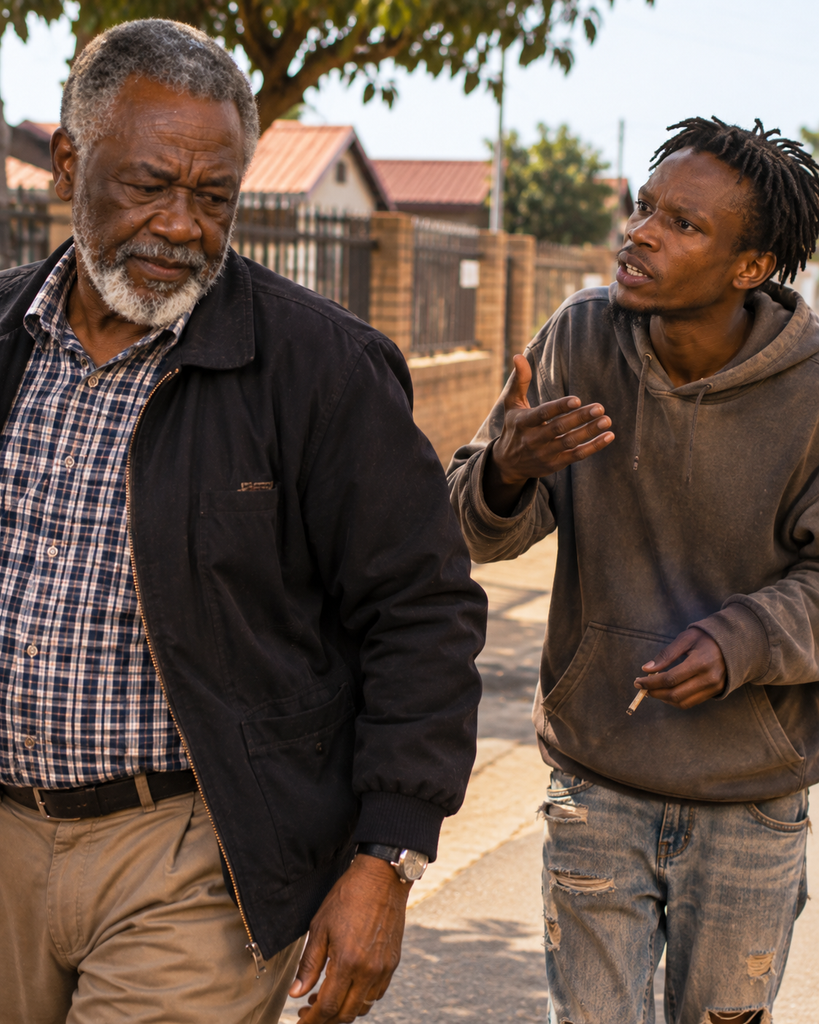
Then one day… as Umkhulu walked down the street… he came across another young man from the community.
A boy he remembered having potential.
The boy had become noticeably thin.
His English was still good.
But his appearance had changed.
He looked almost homeless.
And as Umkhulu approached… he noticed what the young man was smoking.
“My boy… why are you smoking that thing?”
The boy looked at him.
“Umkhulu, look around you.”
“More and more boys are falling victim to this thing.”
“Not only because there are people selling it.”
“But because our community isn’t designed to cater for boys like me.”
He continued.
“Do you know how many boys smoking this thing could have become great actors?”
“Writers?”
“Singers?”
“Engineers?”
“Public speakers?”
“But where are the programmes in our communities that help boys develop those talents?”
“For some of us, the only entertainment around here is smoking and drinking.”
Before he could continue… Umkhulu interrupted.
“No, no, no!”
“There are many children who don’t do these things because they listen.”
“What you’re saying doesn’t make sense.”
“It’s those drugs you’re smoking that are making you talk all this nonsense.”
And the man who knew everyone… continued walking.
A few days later… Umkhulu was sitting at home when his phone rang.
It was the principal of the school where he had delivered his Youth Day speech.
“Umkhulu, how are you, Sir?”
“I’m well, Principal. And yourself?”
“I’m well, thank you. Umkhulu, there’s something I wanted to ask you.”
“Go ahead.”
“Some of our learners have been asking for a place where they can practise music and drama after school.”
“We were wondering if you could speak to the men about using the community church on Saturdays.”
Umkhulu listened.
“Why don’t they use the school?”
“We’ve tried, Umkhulu. But the classrooms are locked after hours, and we don’t have enough people to supervise the children on weekends.”
He continued.
“Some of these children have been asking since last term.”
Umkhulu remained quiet for a moment.
“Since last term?”
“Yes, Umkhulu.”
“And what have they been doing all this time?”
“Well… some have continued practising wherever they can.”
“Others stopped coming.”
The man who knew everyone looked towards the television.
Only a few weeks earlier… he had stood before those same children.
Wearing his military uniform.
Speaking about discipline. Education. And using the opportunities available to them.
He remembered the crowd cheering.
“Umkhulu! Umkhulu! Umkhulu!”
And then… he remembered another voice.
A young man standing beside the road.
“Where are the programmes in our communities that help boys develop those talents?”
Umkhulu still believed the young man was wrong to smoke.
But now… he wasn’t as certain about everything else the boy had said.
“Principal, let me speak to the men. I’ll see what we can arrange.”
“Thank you, Umkhulu. God bless you.”
The call ended.
Umkhulu opened his contacts.
The same men who had helped Mama Grace were only a phone call away.
He knew exactly whom to contact.
But before he dialled… he remembered how the young man had tried to explain himself.
And how he had walked away… before the boy could finish.
Conclusion: The Man Who Knew Everyone

The man who knew everyone sat quietly… looking at the names on his phone.
Men he had known for years. Men he had worked with. Men who had helped him solve problems in the community.
Whenever something needed to be done… Umkhulu knew who to call.
And for many years… it worked.
He had helped families. Organised ceremonies. Settled disagreements. And watched children grow into adults.
Some became successful. Others didn’t. Some left the community. Others stayed.
And through all those years… the people continued calling him Umkhulu.
A man they respected. A man they trusted.
A man who had once commanded thousands of soldiers… but now spent his retirement helping the community that had become his home.
He had earned that respect.
And nothing that happened that afternoon could take it away from him.
But as he prepared to make another call… something kept returning to his mind.
The young man beside the road.
The boy he remembered having potential.
The boy whose appearance had changed. Whose future seemed to be slipping away.
Umkhulu remembered asking him why he was smoking.
And he remembered the boy’s response.
“Umkhulu, look around you.”
For a moment… he thought about his Youth Day speech.
The schoolchildren cheering. His old military uniform. The sacrifices his generation had made.
And the opportunities he had challenged the young people to pursue.
He still believed in those words.
He still believed in discipline. In education. In responsibility.
And he still believed the young man had made decisions that could destroy his future.
But there was something else…
Something he hadn’t considered when they spoke.
The boy wasn’t only trying to explain why he was smoking.
He was trying to tell Umkhulu something about the community.
A community Umkhulu had spent years helping to build.
And for the first time… he had heard somebody describe that same community differently.
Umkhulu looked at his phone again.
He knew the principal. He knew the men who could help. He knew where the church was. And he knew how to organise a meeting.
But he didn’t know how many children had been asking for opportunities that weren’t available to them.
He didn’t know how long some had been waiting.
And he didn’t know how many had already stopped asking.
The man who knew everyone… had spent most of his life being the person people approached for answers.
And perhaps that was why… over time… he had become so comfortable giving them.
He finally selected a contact. Pressed call.
And as the phone began ringing… he thought about the boy once more.
Not because he suddenly agreed with everything the boy had said.
But because he was beginning to realise… there were things he had never allowed the boy to explain.
And somewhere in that community… the young man was continuing with his life.
Just like everybody else.
Umkhulu didn’t know what would become of him.
He didn’t know whether the boy would change.
Or whether another conversation would make any difference.
But there was one thing he couldn’t remember.
What the boy had wanted to say next.
Because when the boy tried explaining… the man who knew everyone had walked away before he could finish.
Mpumelelo Ncwana writes about the psychology behind decisions, identity, and the systems that shape behaviour.