
Before They Trusted Her
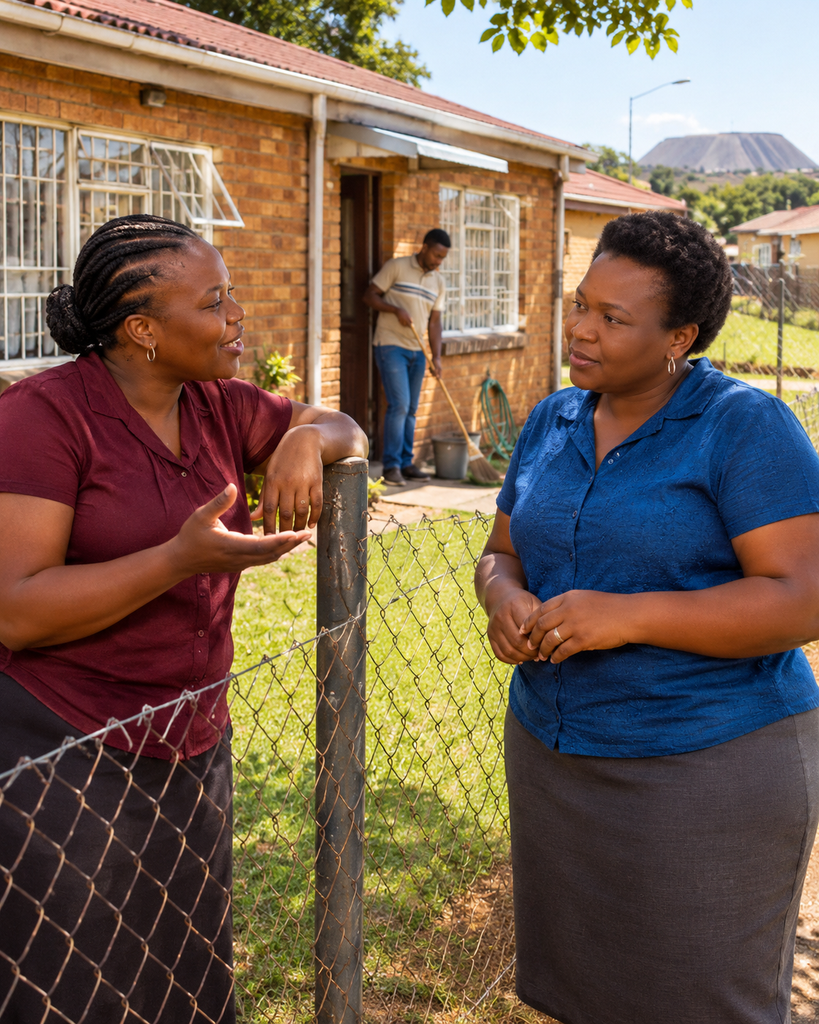
The woman the stokvel trusted was like her family’s personal accountant and financial adviser at the same time.
Father was the breadwinner. He contributed the household’s monthly income through his work. And she was the one who helped manage that money.
The area where the woman lived was rich in raw materials. In fact… that was one of the main reasons her family had moved there from the village.
The area offered employment opportunities. And life there was different from the village they had left behind.
There was running water through taps. A bathtub. And electricity.
The woman still remembered when she first arrived. She had recently married. And when she and her husband settled into their new home… the first people they became close to were their neighbours.
Those neighbours had also come from another village. Like many families in the area… they had originally moved there in search of work. But by the time the woman arrived… they had already been living there for years.
It was through those neighbours that the woman began forming her first friendships. And those friendships slowly introduced her family to other people.
People from different backgrounds. Different villages. Different walks of life.
But despite those differences… many of the families had something in common. They hadn’t originally come from that area.
They had moved there because its natural resources had created opportunities for employment.
And over time… what had started as a place where people came looking for work… had become a place where families were building their lives.
The Women Who Gathered
Unity was what bonded that community. Almost as though everyone knew everyone.
If you weren’t from that area… you would stand out. Not because of your skin colour. But because the community operated almost like one big family.
And just like most families… not everybody got along. There were disagreements. Different personalities. And people who didn’t always see things the same way.
But somehow… the positive outweighed the negative. And the community continued to maintain itself.
Among the people who had grown close over the years… was a group of women. Women who had developed friendships with one another. Including the woman the stokvel would come to trust.
And one of the things that brought these women together was their husbands.
After a long day at work… the men would often gather at one of their friends’ houses. They would drink alcohol. Relax. And talk about whatever was happening in their lives.
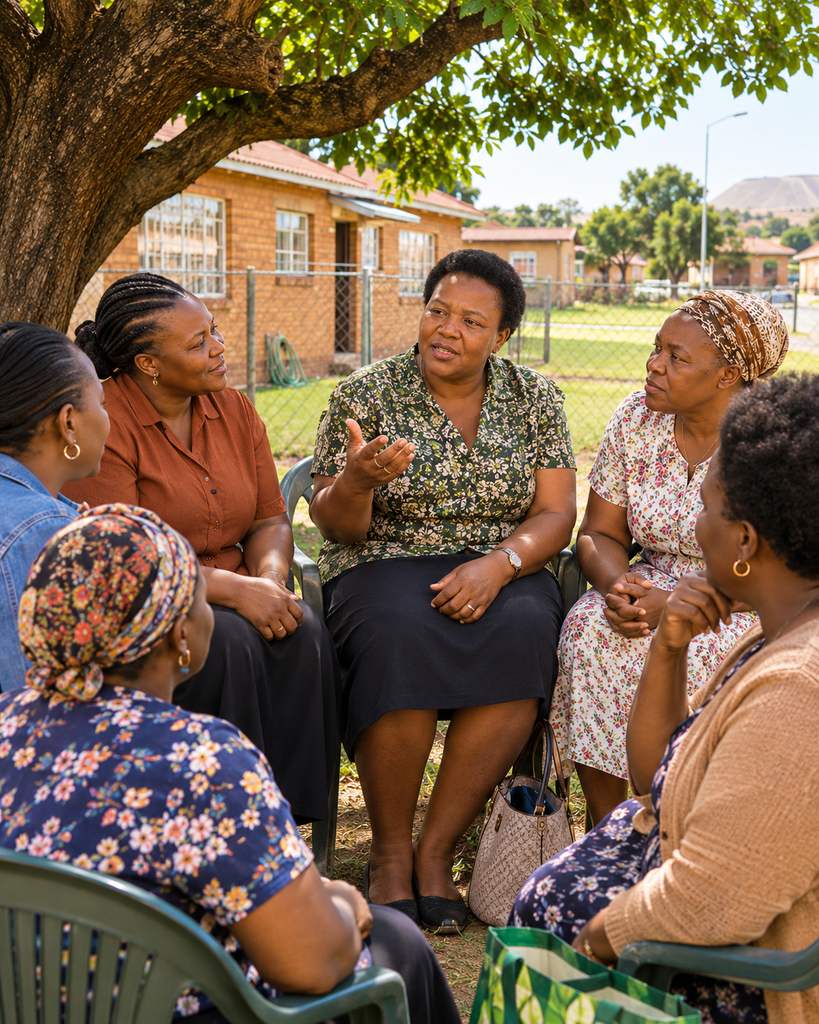
Meanwhile… the women would find themselves sitting together under a tree. Having conversations of their own.
Sometimes about specials at the shops. Baby food. Groceries. Household responsibilities. And how to make the money coming into their homes last until the next payday.
But not every conversation was light. Some women spoke about their frustrations. A few complained that their husbands were spending too much money on alcohol. And that their families were struggling to afford basic necessities because of it.
Other days… the conversations would turn towards church contributions. Their children. Or matters they preferred discussing among themselves.
It was during one of these gatherings that the woman the stokvel would come to trust shared her understanding of household finances.
“As women, we’re more responsible with money than men.”
She continued.
“That’s why I believe a woman should be the one holding her husband’s bank card.”
The women listened.
“Don’t ask. Insist.”
“Then give him a salary of his own, so he can still go out and enjoy himself with the other men.”
For some of the women… this was something they had never considered. They were used to their husbands bringing money into the household. But the idea of taking responsibility for managing that money themselves… was something different.
And as the sun and moon continued exchanging places… the woman’s philosophy slowly began spreading. From one conversation to another. From one household to the next.
What had begun as a discussion beneath a tree… was becoming an idea that more women in the community were beginning to consider.
When the Woman the Stokvel Trusted Took Responsibility
The woman the stokvel trusted was helping her son get ready for school. She gave him money for the school’s casual-clothes day.
But before leaving… her son had another request. He wanted money to attend a party with his friends.
Mother raised one eyebrow.
“What party?”
She began asking questions. Her son answered. But his explanations were vague. And Mother could tell there were things he wasn’t telling her.
After listening… she responded.
“I’ll give you money after school.”
“But first, I need to buy the household essentials, give your father his money and make sure the stokvel contribution is covered.”
“If there’s anything left, I’ll give you some.”
Then she looked at him.
“But don’t buy alcohol with my money.”
Her son smiled.
“Obviously, old lady.”
“Even though Jesus turned water into wine, I won’t be participating in alcohol.”
He chuckled.
“Haii wena!”
“Stop trying to be funny and go to school!”
Her son walked off. And Mother smiled… shaking her head.
Later that day… she did something she had never done before. She went to meet the women beneath the tree before their husbands returned from work.
Hours before the area would come alive. And when it did… you would know people had been paid.
As she arrived… the women were already talking. She listened quietly.
“Yoh, hle!” one woman complained.
“I hope he heard me last night when I told him not to buy unnecessary things.”
“He’ll buy clothes just to show off to his family.”
“Then tomorrow the children won’t even have nappies.”
Another woman spoke about groceries. Others shared their own experiences. And among them were women who had begun applying the philosophy the woman the stokvel trusted had introduced.
One explained that she no longer worried as much about having enough money for her stokvel contribution.
The conversations continued. Then… the woman who had been listening quietly decided to speak.
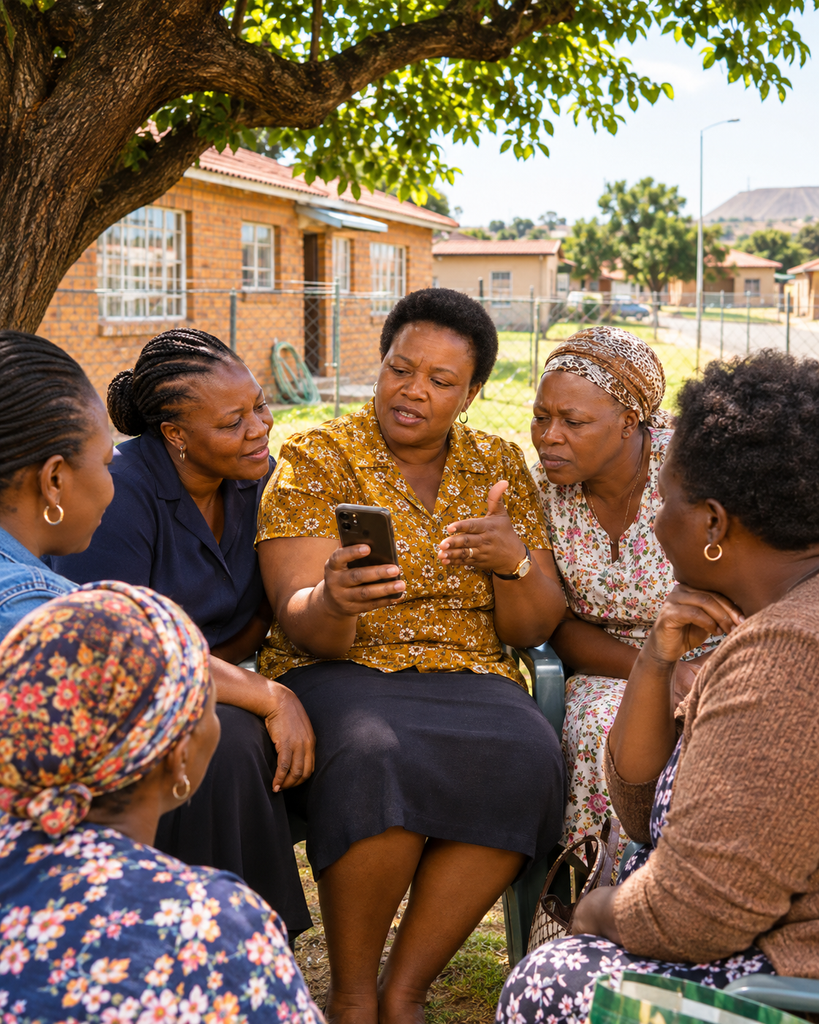
“Ladies, look.”
“This is my husband’s bank account.”
The women reacted.
“Haiibo, sisi!”
She continued.
“My husband brings home R7,000.”
“And the secret is moving the important money before anybody even blinks.”
She began explaining.
“R2,000 goes towards our monthly groceries.”
“R500 goes into our grocery stokvel. We’re twenty women.”
“R1,600 covers electricity and transport.”
“R800 goes towards my child’s schooling.”
“And I put R700 away, just to make sure we survive that fourth week of the month.”
The women listened. She wasn’t finished.
“As for my husband…”
“I don’t give him his R1,000 all at once.”
“Because if I do, that money can disappear in one weekend.”
“So every Friday, he gets R250.”
“He can still go out and enjoy himself with the other men.”
Then she added…
“And I keep R400 for myself.”
“That way, everyone has something, and the household keeps running.”
The women had heard her speak about managing money before. But now… they could see exactly how she divided the income coming into her home.
The groceries. The electricity. The transport. Her child’s education. The stokvel contribution. Her husband’s spending money. Her own. And the little she kept aside for the end of the month.
Looking back now, I realise how much knowledge can sit behind a woman’s ability to make the little money available last. Knowing what must be bought first. What can wait. And what the household might need before the next payday arrives. For some women… that understanding began long before they had households of their own… a different woman’s journey explored deeper in When Mother Was A Daughter.
What had started as an idea beneath that same tree… was becoming something the women could imagine applying in their own households.
And as the conversation continued… more of them began considering her way of managing money.
The Stokvel Rules They Agreed On
As the months went by… the woman the stokvel trusted began noticing something. More women from her stokvel group, known as Basadi Ba Maano, were taking control of their household finances.
The group consisted of twenty women. Each woman contributed R500 every month. And when everyone made their contribution… the group collected R10,000.
With more women managing their household money… their contributions towards the stokvel became more consistent. There were fewer conversations about being unable to contribute that month. Fewer complaints about money running out before the next payday.
And slowly… the women began seeing what their collective efforts could achieve.
Every month, the money they contributed was used to purchase groceries for the members. It was an arrangement they had agreed upon. Twenty women contributing towards something that would benefit their households.
That’s when the woman the stokvel trusted introduced another idea.
What if they moved their stokvel into a more organised banking arrangement?
She discussed it with her best friend. The same neighbour who had welcomed her into the community when she first arrived.
Together with several other women… they began exploring the possibility. Eventually, the group agreed. They approached a local bank that offered accounts for stokvels.
And the name they chose was…
Basadi Ba Maano Grocery Club.
What had started as an informal arrangement among women who knew one another… was now becoming something more structured.
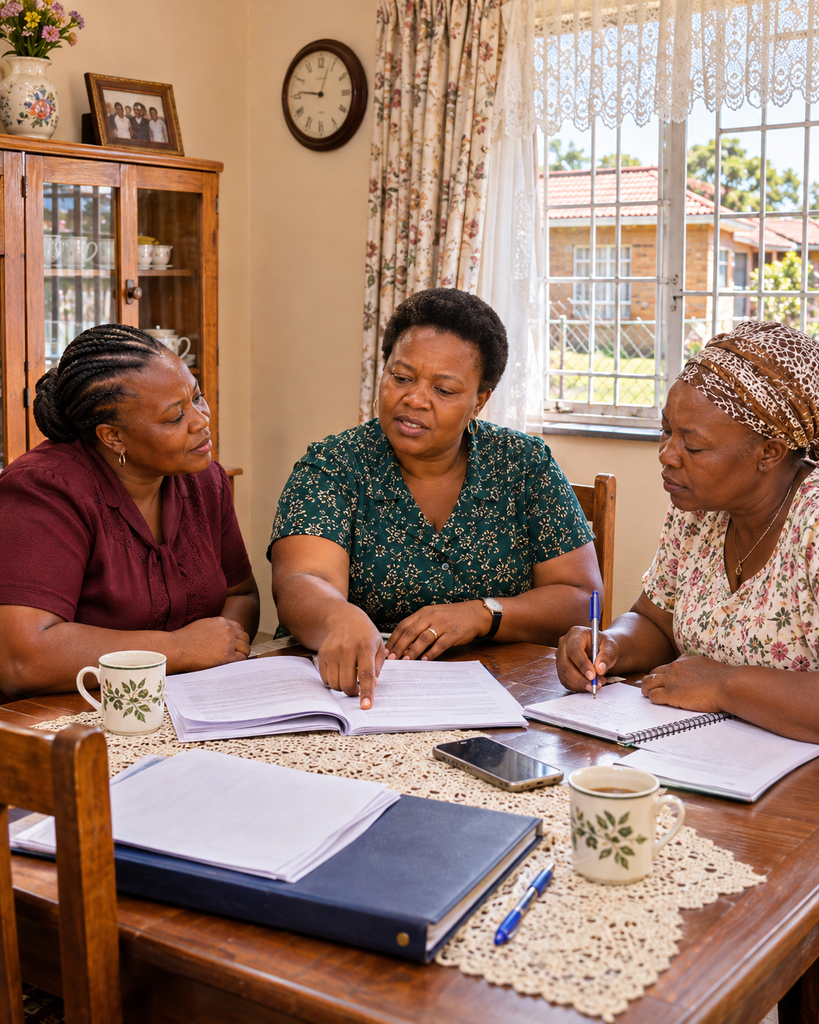
The group agreed that three women would be responsible for administering the account. And when the members chose their representatives… the woman whose financial philosophy had influenced so many households was selected as Chairperson.
Her best friend… the neighbour who had been part of her life since those early years… became the Treasurer. And another woman was chosen as Secretary.
The three women submitted their identification documents. Their proof of residence. And the constitution the group had agreed upon.
But the account came with an important arrangement.
No single woman could withdraw or transfer the group’s money on her own. Under their selected account mandate… at least two of the three authorised signatories had to approve a transaction.
The Chairperson couldn’t act alone. Neither could the Treasurer. Nor the Secretary.
And although the three women were authorised to administer the account… the money still belonged to all twenty members. It was money they had contributed towards purchasing groceries each month.
Approving a transaction did not give any one of the three women the right to change its intended purpose without the group’s agreement.
This arrangement reflects how stokvels in South Africa can bring structure to the trust that already exists between their members. The National Stokvel Association of South Africa provides guidelines on how groups can establish their own rules, appoint representatives and agree on how transactions are authorised… as outlined in the NASASA Stokvel Constitution.
When the banking arrangements were completed… the women celebrated. Their Basadi Ba Maano Grocery Club now had an account in its own name.
And while their husbands continued gathering at one another’s houses after work… the women had built something of their own.
Something that had grown out of conversations beneath a tree. Friendships. Shared experiences. And their desire to become more organised with money.
As the months turned into years… the grocery stokvel continued. And the woman who had once been known for her opinions about household finances… became one of the most trusted women in the group.
Not simply because she knew how to divide her husband’s salary. But because the women had chosen her to help lead something they had built together.
The Money They Released
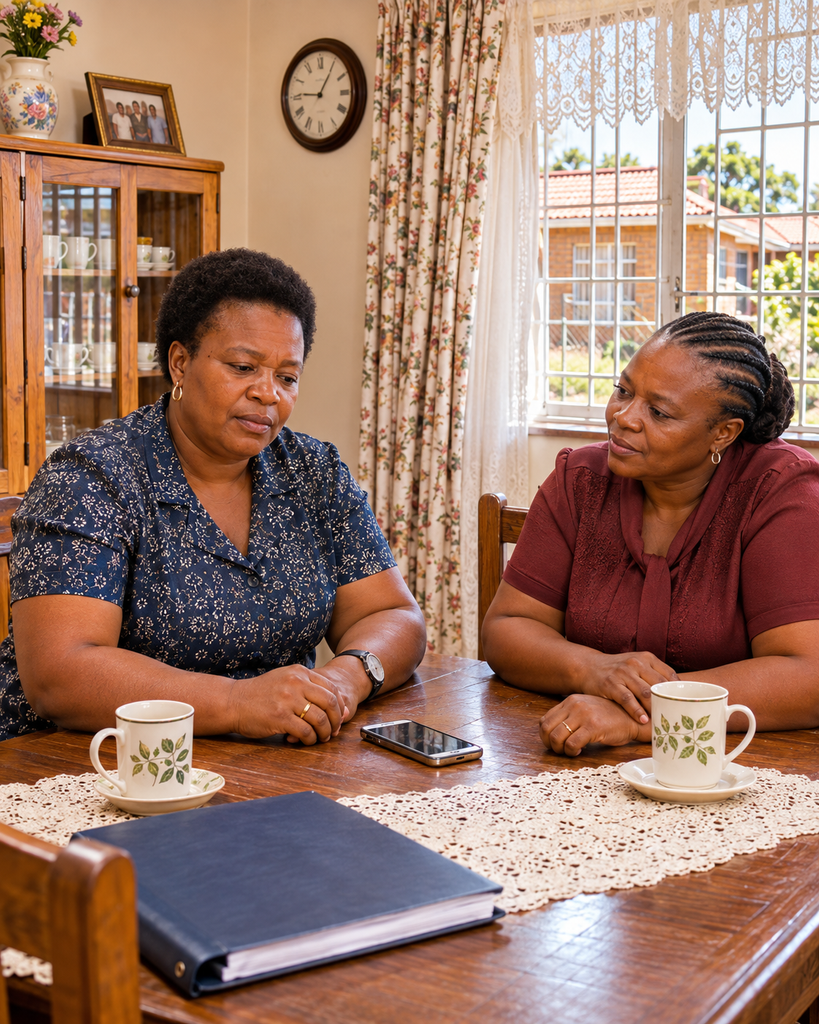
As the years passed… Basadi Ba Maano Grocery Club became one of the most respected stokvels in the area.
An area that had once been known primarily for the raw materials beneath its ground. The same resources that had attracted families from different villages in search of employment.
But over the years… the women living there had built something of their own.
Twenty women. Nineteen other members alongside the woman the stokvel trusted.
Together… they had created something that helped their households. Something that had started with conversations beneath a tree. And had grown into a grocery club that many people in the community admired.
But one evening… there was a knock at the door.
The woman wasn’t expecting anybody. She opened it.
Two men were standing outside. Their faces were unfamiliar. And neither appeared interested in exchanging greetings.
“How can I help you?”
One of the men looked at her.
“We’re looking for your son.”
She frowned.
“My son?”
“Yes. Your son.”
“He took our money. Told us it was some kind of investment scheme.”
The other man stepped closer.
They accused her son of gambling with money he had promised to invest. Mother didn’t understand everything they were telling her. But she understood their anger.
“He’s not here.”
The men looked at one another. Then one of them reached for something.
A gun.
And suddenly… the conversation changed.
“Listen carefully.”
“Your son owes us R8,000.”
“He has two days to pay.”
The man paused.
“And if we don’t get our money…”
He looked towards the house.
“I’ll make sure bullets hit every corner of this place.”
Mother stood still. Her heart was racing. But she tried not to show it.
She wanted to ask more questions. She wanted to understand what her son had done. Whether the accusations were true. And how he had become involved with these men.
But with a gun pointed towards her… there were questions she didn’t dare ask.
Eventually… the men left. And the woman closed the door.
For a while… she stood there. Thinking about her son. The same boy who would joke with her before leaving for school. Who once reminded her that Jesus had turned water into wine.
And now… two strangers had arrived at her home, threatening his life over money she knew nothing about.
She didn’t tell her husband. She knew how he might react. And she wasn’t ready for another confrontation.
But there was something else.
Two days. R8,000. And a threat against her family.
She had spent years teaching other women how to manage money. How to divide it. How to make it last. How to prepare for unexpected expenses.
But this time… she couldn’t find R8,000 in her household budget. The money was already allocated. And the threat wasn’t going to wait for another payday.
Looking back now, I realise how different a decision can begin to look when a woman believes the people she loves are in danger. The responsibilities remain. So do the consequences. But the circumstances under which she must make a decision have changed. In another household… a woman found herself confronting a different set of choices when the future of her family was at stake… explored deeper in The Woman Who Chose Survival.
Then she thought about the stokvel.
Basadi Ba Maano Grocery Club.
Twenty women. R500 each. R10,000 contributed every month. Money intended to purchase groceries for their households.
For the first time… she began considering that money for something entirely different.
But there was a problem. She couldn’t withdraw it alone. The club required two authorised signatories.
So she approached the woman she had trusted for years. Her neighbour. Her best friend. The Treasurer.
“Sisi, I need you to authorise a withdrawal from the stokvel account.”
Her friend looked at her.
“For the groceries?”
The Chairperson hesitated. Then answered.
“Yes. I need to sort out this month’s money.”
Her friend listened. They had managed the club together for years. And the Chairperson had never given her a reason to believe she would use the group’s money for something else.
So when the request for R8,000 came… the Treasurer authorised it.
She didn’t know about the two men. She didn’t know about the gun. And she didn’t know what her friend intended to do with the money.
The Chairperson now had the approval required to release the funds. But she didn’t use them to purchase groceries.
Instead… she sent the R8,000 to the account the men had given her.
Money contributed by twenty women. Money that was supposed to help their families. Money she had been trusted to help administer.
Gone.
And only R2,000 remained from that month’s contributions.
For a moment… the woman felt relieved. She had paid the amount the men demanded.
Perhaps her son would be safe. Perhaps those men would never return. Perhaps she could find a way to replace the money before anybody noticed.
But the stokvel had its own responsibilities. The women had contributed. Their families were expecting groceries. And the money they had agreed to use for those purchases was no longer there.
As the days passed… the questions began.
“When are we collecting our groceries this month?”
Another woman wanted to know whether the shopping had already been arranged. Then another asked why things were taking longer than usual.
The Chairperson had answers for many things. For years… she had been the woman others approached when they needed advice about money.
But now… she was struggling to answer a question about money that had been placed in her care.
And eventually… her phone rang.
It was her best friend. The Treasurer.
“Sisi…”
“The women are asking about their groceries.”
A brief silence followed.
“What must I tell them?”
Conclusion: The Woman the Stokvel Trusted
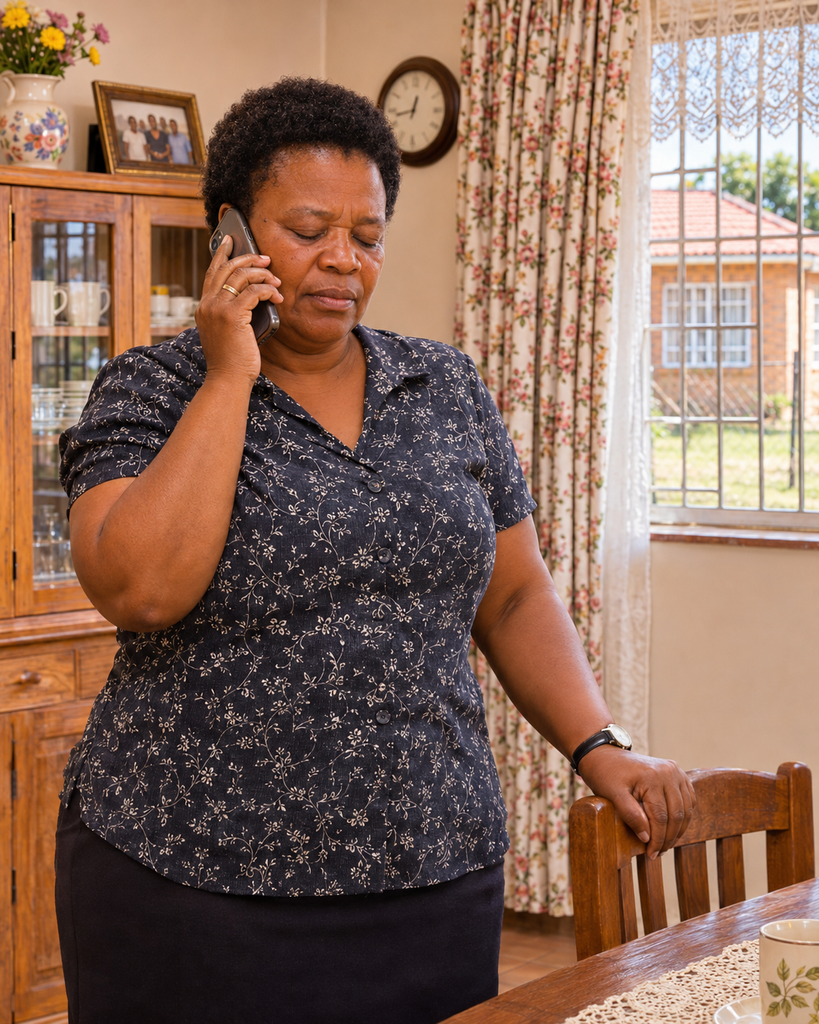
“Sisi… what must I tell them?”
For the first time in many years… the woman the stokvel trusted didn’t know what to say.
She had spent most of her married life knowing exactly where the money needed to go. How much was for food. How much was for electricity. How much her husband could spend. And how much needed to be put aside before the month came to an end.
She was the same woman who sat beneath a tree… teaching other women how to manage their household finances. The same woman whose ideas had travelled from one household to another.
And eventually… the same woman nineteen others had chosen to lead something they had built together.
Basadi Ba Maano Grocery Club.
Twenty women. Twenty households. Each contributing R500 every month. Not because they had money to waste. But because they had plans for it.
And somewhere among those women… there were children waiting for groceries. Husbands. Families.
People who knew nothing about the two men who had stood outside her door. Nothing about the gun. Or the threat against her son.
They only knew that they had contributed their money. And that the woman they trusted would help make sure it was used for what they had agreed upon.
But the woman knew something they didn’t.
She knew where R8,000 had gone. She knew why she had sent it. And she knew that her best friend had authorised a withdrawal without knowing what the money would actually be used for.
For years… she had encouraged women to take control of their household finances. To make difficult decisions. To put their families first.
And when her own family was threatened… she made a decision too. A decision she believed might protect her son.
But the money she used… didn’t belong to her family alone. It belonged to women who had trusted her with theirs.
And perhaps that was what made the moment so difficult.
Because the woman standing in that situation wasn’t a stranger to responsibility. She understood it. She had built her reputation around it.
Yet knowing how to manage money had not prepared her for a moment when protecting someone she loved meant taking something from people who trusted her.
Her phone was still against her ear. Her best friend was waiting for an answer.
And somewhere in that community… nineteen other women were waiting for their groceries.
The woman looked around the house she had spent years learning how to provide for. The same house where two men had threatened to fire bullets. The same house where her son had once stood joking with her about Jesus turning water into wine.
She had sent the money. But she still didn’t know whether those men would keep their word.
And now… she had another question to answer. One that couldn’t be settled by dividing a salary. Or moving money from one account to another.
“Sisi… are you still there?”
She closed her eyes.
And for a moment… the woman who always seemed to have an answer… remained silent.
Because the nineteen women didn’t know what had happened. Her best friend didn’t know. Her husband didn’t know.
But she did.
And she was still the woman the stokvel trusted.
Mpumelelo Ncwana writes about the psychology behind decisions, identity, and the systems that shape behaviour.