
INTRODUCTION
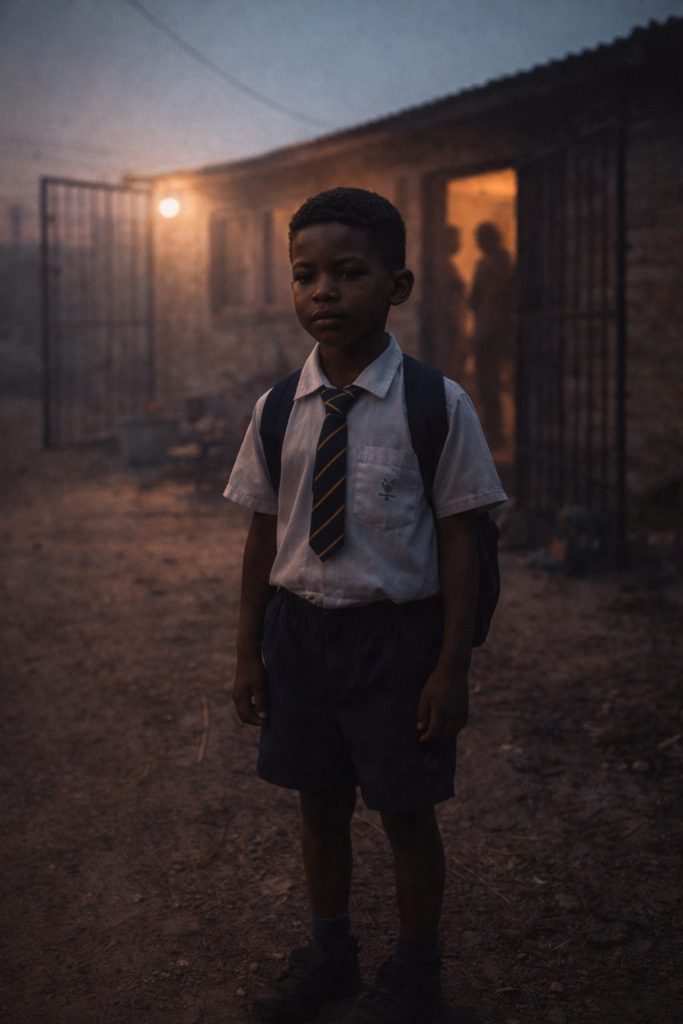
The Child Who Learned to Disappear does not begin in adulthood.
It begins early.
Earlier than most people are willing to admit.
There is a version of you that learned how to behave before it ever learned how to live.
Not because you chose it.
Because you had to.
In many South African homes, especially in townships, survival comes before self.
Respect comes before expression.
Obedience comes before identity.
And if you were raised in that environment, you didn’t question it.
You adapted.
The Child Who Learned to Disappear Starts Early
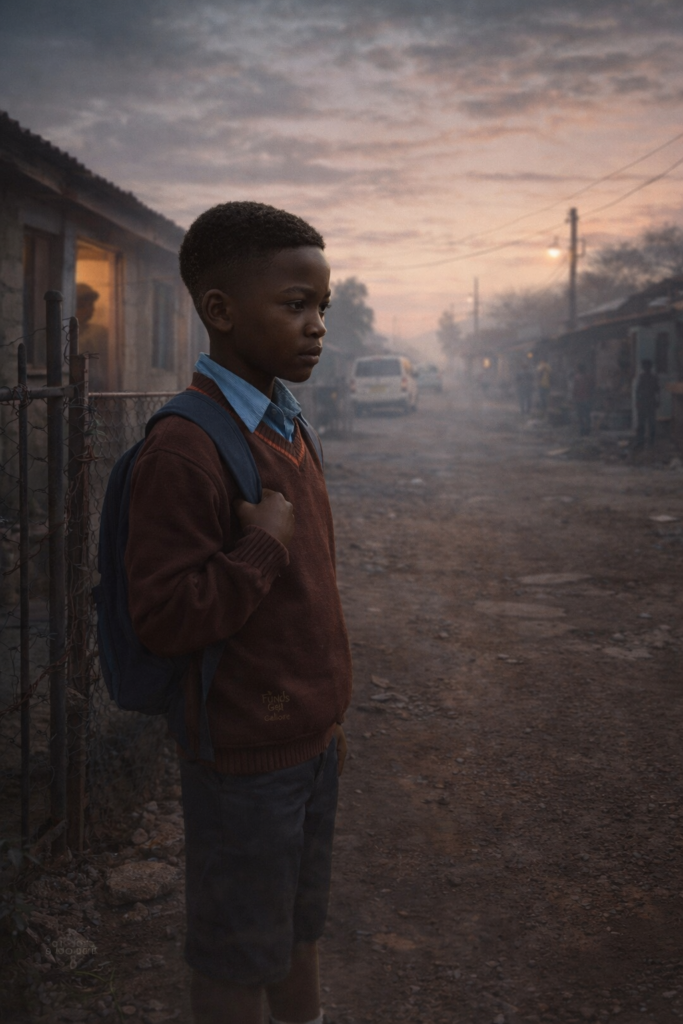
It’s still dark when the house wakes up.
Not night-time dark… township early-morning dark.
The kind where movement begins before the sun.
A child wakes up, not thinking about play, but about responsibility.
Who needs help.
What needs to be done.
What must not go wrong.
You learn quickly.
Don’t talk too much.
Don’t question.
Don’t create problems.
Because peace in the house matters more than your voice.
So you adjust.
You become the good child.
The one who listens.
The one who helps.
The one who doesn’t complain.
And everyone praises you for it.
The Child Who Learned to Disappear: When Obedience Becomes Identity
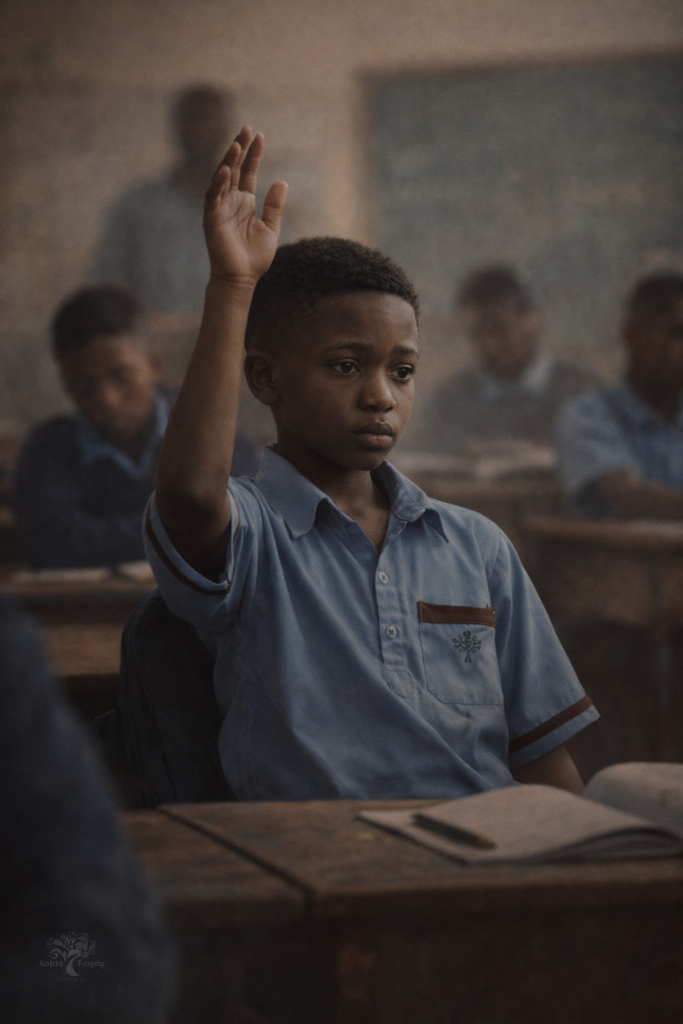
At first, it feels like discipline.
That’s what everyone calls it.
“She’s so respectful.”
“He’s so well-behaved.”
“They’re mature for their age.”
And it feels good.
Because you’re seen.
So you do more of it.
You stay quiet even when something feels wrong.
You help even when you’re exhausted.
You carry things that were never yours.
And slowly, something changes.
You stop asking yourself what you want.
Not because you don’t have desires.
But because wanting something starts to feel selfish.
The Child Who Learned to Disappear: The Weight That Looks Like Love

There is a kind of pressure that doesn’t shout.
It doesn’t break things.
It doesn’t make noise.
It just sits on you.
Every day.
At home, you become responsible.
At school, you become the hope.
“If you make it… we all make it.”
It sounds like love.
But it feels like weight.
Because now your life is no longer just yours.
It becomes a plan.
You don’t just carry your future.
You carry everyone’s expectations.
And you do it quietly.
The Second Mind: How the Pattern Is Built

This is where the pattern becomes visible… not as a voice, but as something that quietly shapes how you move, how you decide, and how you avoid, the same pattern explored in The Second Mind: The Voice That Keeps You Stuck.
Not as a voice.
As a pattern.
You learn to ignore your feelings.
You learn to suppress your thoughts.
You learn to move without checking yourself.
You become functional.
Reliable.
Dependable.
But underneath that…
something else is happening.
You are disconnecting from yourself.
Not in a dramatic way.
In a quiet, consistent way.
The Second Mind: The Silent Disappearance
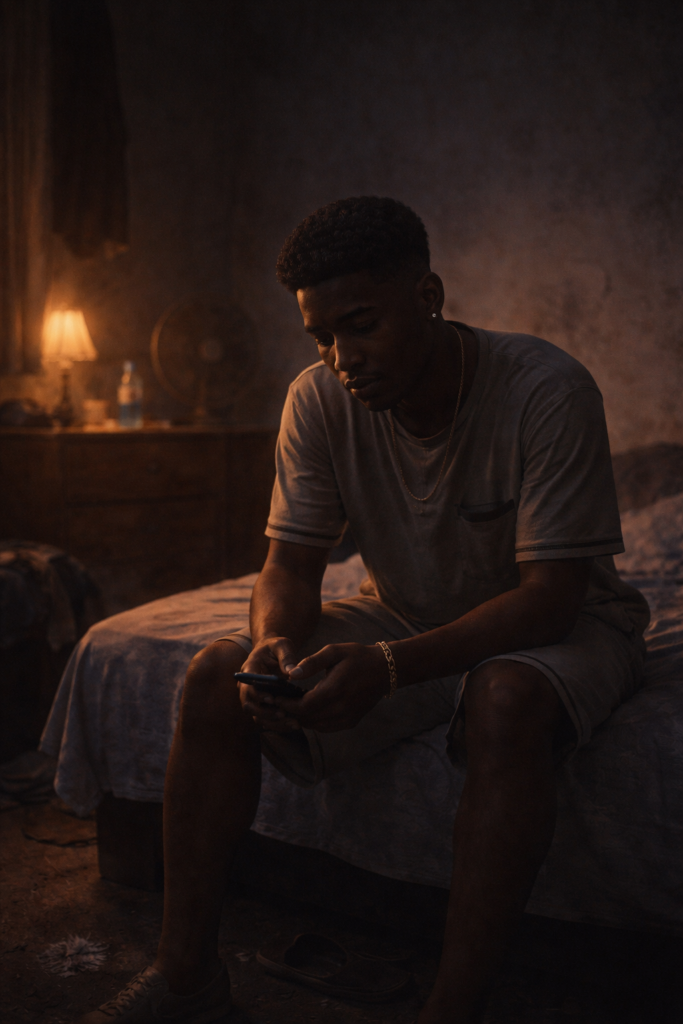
You don’t notice it immediately.
Because everything still looks normal.
You go to school.
You help at home.
You do what’s expected.
But inside, something is fading.
Your curiosity.
Your voice.
Your ability to imagine a life that belongs to you.
You stop asking questions.
You stop exploring possibilities.
You stop checking in with yourself.
And eventually…
you stop noticing that anything is missing.
The Second Mind: Growing Up Without Yourself
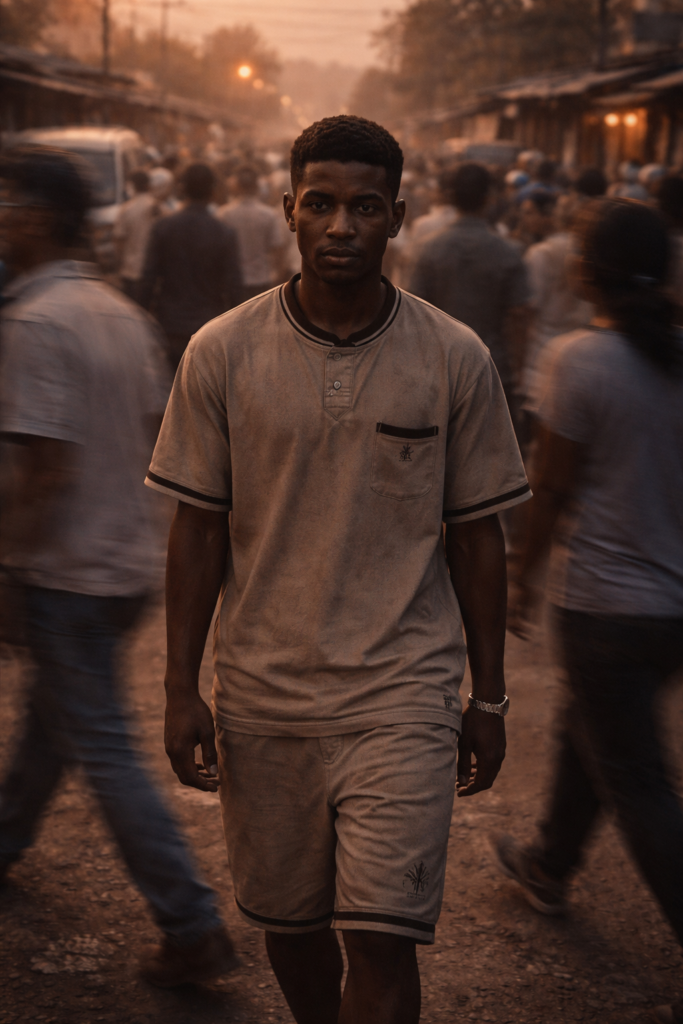
Years pass.
But the pattern remains.
Now you’re older.
But something still feels off.
You struggle to choose yourself.
You feel guilty when you rest.
You avoid conflict, even when it matters.
You call it personality.
But it’s conditioning.
You call it discipline.
But it’s suppression.
And every time life asks you:
“What do you want?”
You hesitate.
Because you were never trained to answer that.
This is not random… it begins earlier than most people realise, in environments that shape how you think before you even question it, as explored in School Thinking: The Origin of the Loop.
The Second Mind: Why You Keep Escaping Yourself
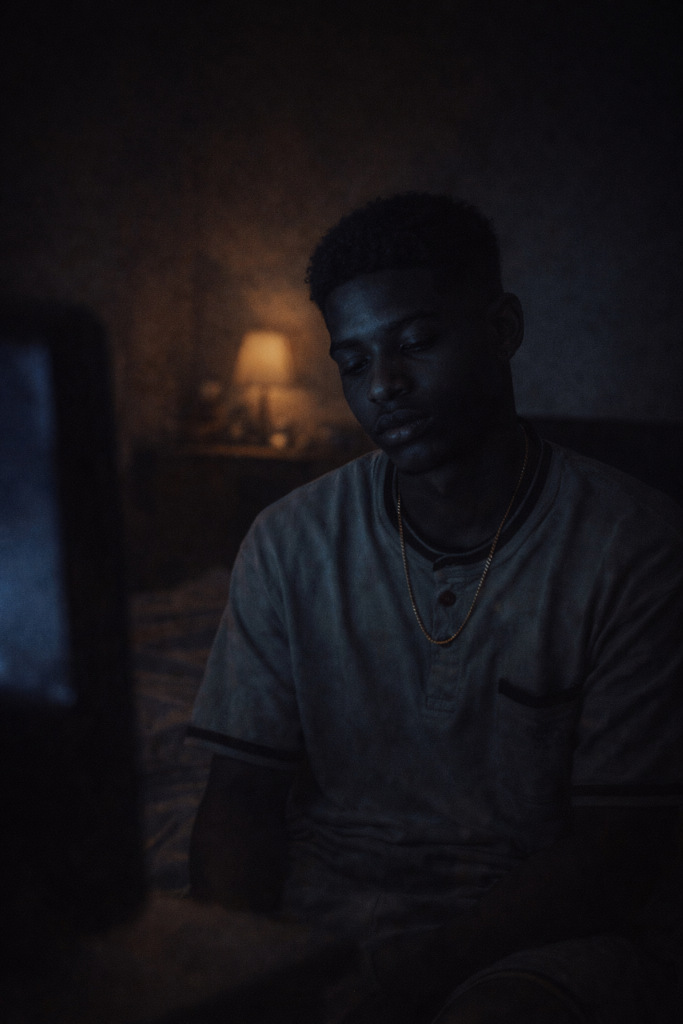
This is where it connects.
When you grow up disconnected from yourself…
you don’t just lose clarity.
You start escaping.
You avoid decisions.
You delay action.
You distract yourself when things get uncomfortable.
Not because you’re lazy.
But because you were never taught how to hold discomfort.
This behaviour is not accidental… it reflects something deeper that has been repeating long before you noticed it.
So when pressure appears…
you look for relief.
And that becomes your pattern.
A pattern you don’t question.
Because it feels normal.
The Second Mind: The Cost of Not Seeing It

The cost is not always obvious.
It’s not failure.
It’s not rebellion.
It’s not collapse.
It’s something quieter.
You move through life…
without fully belonging to it.
You make decisions…
without fully choosing them.
You live…
without fully feeling present in your own life.
And the most dangerous part is this:
Everything still looks fine from the outside.
And for many people… the first sign that something is missing is not collapse or crisis. It’s the quiet awareness that begins when familiar patterns stop feeling invisible, a shift explored deeper in The Version That Started Noticing.
CONCLUSION: The Second Mind: The Child Who Learned to Disappear

The Second Mind: The Child Who Learned to Disappear is not about weakness.
It’s about adaptation.
You did what you needed to do to survive your environment.
You became who you needed to be.
But survival is not the same as self.
And at some point…
you have to face that.
Not with blame.
Not with anger.
With awareness.
Because the moment you see the pattern…
you interrupt it.
The moment you interrupt it…
you begin to return to yourself.
Not all at once.
Not perfectly.
But moment by moment.
And that is where everything begins to change.