
Forex Strategy for South Africans P2: In forex trading, or as a professional trader, a trading strategy is one of the essentials of trading.
Without a plan and strategy, you are simply gambling, my friend. In this second part of Forex Strategy for South Africans,
I will focus on the key elements you need to become a professional trader.
Nothing can hold you back except yourself and laziness.
Even though we can provide you with all this knowledge, it alone is not enough. You need to develop and work around your strategy so that your edge can kick in.
Understanding Price Action Patterns: Forex Strategy for South Africans P2
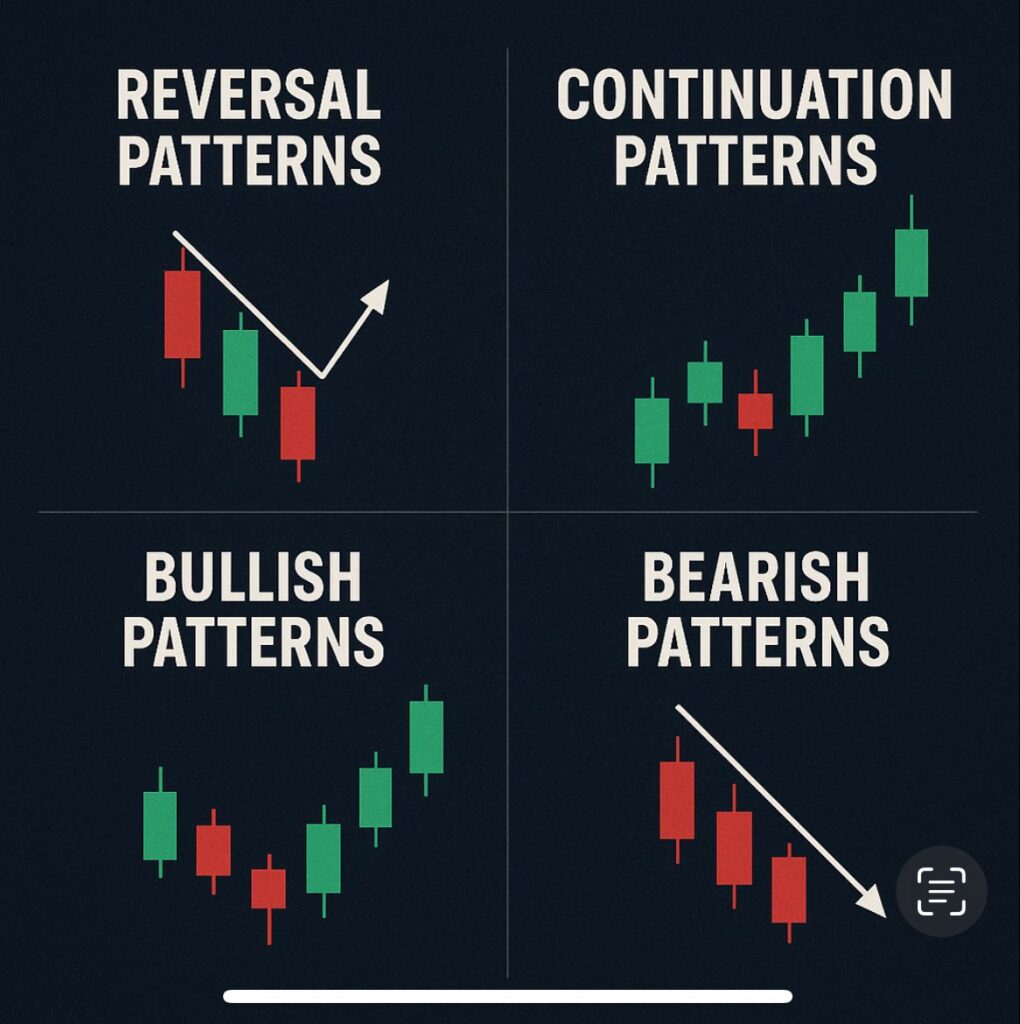
Different Types of Patterns
- Reversal Patterns
- Continuation Patterns
- Bullish Patterns
- Bearish Patterns
When to Look for Reversal Patterns
Reversal patterns occur at the end of a trend. They signal the start of a new trend and are visible on most timeframes. The higher the timeframe, the stronger the confirmation.
When to Look for Continuation Patterns
Continuation patterns appear at the start of a new trend or confirm its continuation. These apply to both bullish and bearish markets, providing us with market entry opportunities if we missed the initial move.
When to Look for Bullish Patterns
Bullish patterns signal buying opportunities. They indicate that price is preparing to move upward after the pattern completes.
When to Look for Bearish Patterns
Bearish patterns are the opposite of bullish patterns. They signal selling opportunities and indicate that downward momentum is likely to continue.
Mastering Price Action: Forex Strategy for South Africans P2
If you want to master price action, you need to become skilled at identifying reversal patterns, continuation patterns, bullish and bearish flags, and understanding breakouts. Experience rewards traders with these skills over time.
Charts must be studied carefully to spot patterns that give you an edge. Entering and exiting trades at the right time is crucial.

Pay attention to market averages and overall trends. Both reversals and breakouts are powerful indicators that help traders make informed decisions.
- Reversal Trend: Signals a sudden move in the opposite direction.
- Breakout: Occurs when price moves beyond a defined support or resistance level.
To identify a trend, look for a strong preceding trend. Traders often enter at reversal points and exit before the next reversal, using multiple timeframes for confirmation.
Once a currency pair breaks a price barrier, volatility usually increases, and prices tend to move in the breakout’s direction.
Breakouts as a Trading Strategy: Forex Strategy for South Africans P2
Breakouts are often the starting point for volatility and larger price swings. Before a breakout occurs, price usually consolidates in a tight range as buyers and sellers pause.
- Continuation Breakouts: Occur when the market pauses, then continues in the same direction as the original trend.
- Reversal Breakouts: Occur when the market pauses, then reverses direction, signalling exhaustion of the previous trend.
False Breakouts: Sometimes, price breaks a level but then reverses. These can be profitable setups when traded correctly, as trapped traders cover their positions.
Identifying False Breakout Patterns
False breakouts can be spotted by monitoring trading volume.
Real breakouts are usually accompanied by strong volume. If volume is weak or decreasing, the breakout may fail, creating a “trap.”
- Low volume = likely false breakout.
- High volume = stronger chance of a real breakout.
False Breakout Strategy in Forex Trading
To stay disciplined when trading false breakouts, set clear rules:
- Define your entry point.
- Place a stop-loss.
- Set profit targets.
Failed Breakouts and Advanced Entries
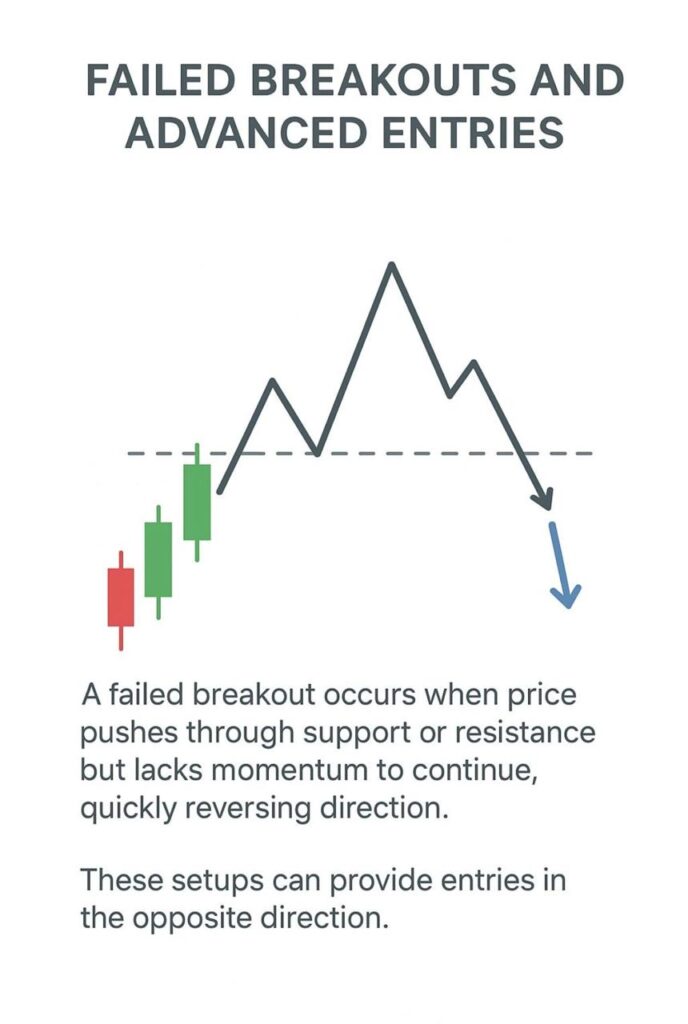
A failed breakout occurs when price pushes through support or resistance but lacks momentum to continue, quickly reversing direction.
These setups can provide entries in the opposite direction.
Conditions to confirm a breakout:
- Identify key support and resistance levels.
- Ensure the breakout candlestick closes beyond the key level.
- Wait for additional bars to confirm the new trend.
How to Avoid False Breakouts
- Use higher timeframes for stronger confirmation.
- Pay attention to candlestick patterns at key levels.
- Monitor trend momentum: increasing momentum suggests a valid breakout, while weakening momentum suggests a potential false breakout.
Conclusion: Forex Strategy for South Africans P2
In this second part of Forex Strategy for South Africans, we explored price action patterns, breakouts, false breakouts, and failed breakouts.
Understanding these concepts is vital for developing a reliable trading edge. The key takeaway is that not every breakout or pattern is genuine—discipline, patience, and careful observation of volume, candlestick structure, and momentum will separate successful traders from gamblers.
Master these tools, and you will increase your chances of becoming a consistently profitable trader.