
Gold’s journey through time: from ancient civilizations to the modern day economy—is also our story.
Over the centuries, gold has taken many forms and still holds influence in today’s world.
As Robert Kiyosaki said, “Gold is God’s money. It has been here since the Earth was formed and will be here long after we’re gone.”
This sentiment, along with the points we’ll explore, explains why gold has and will likely continue to hold more value than the fiat currency system used today.
Gold has stood the test of time, silently influencing religion, social status, wealth, and war.
One word that ties all of this together is value. Gold was, is, and will continue to be perceived as valuable.
Gold in Ancient Civilizations: Gold’s Journey Through Time
The First Cultures to Value Gold: Gold’s journey through time began with ancient civilizations like the Egyptians, Mycenaean’s, the Greek Empire, and the Inca civilization.
Let’s travel back in history to explore why gold was seen as valuable by these cultures.
Ancient Egypt
Gold’s story in Egypt began around the 27th century BCE.
Egyptians mined gold and revered it due to its deep influence on their religion, society, and culture.
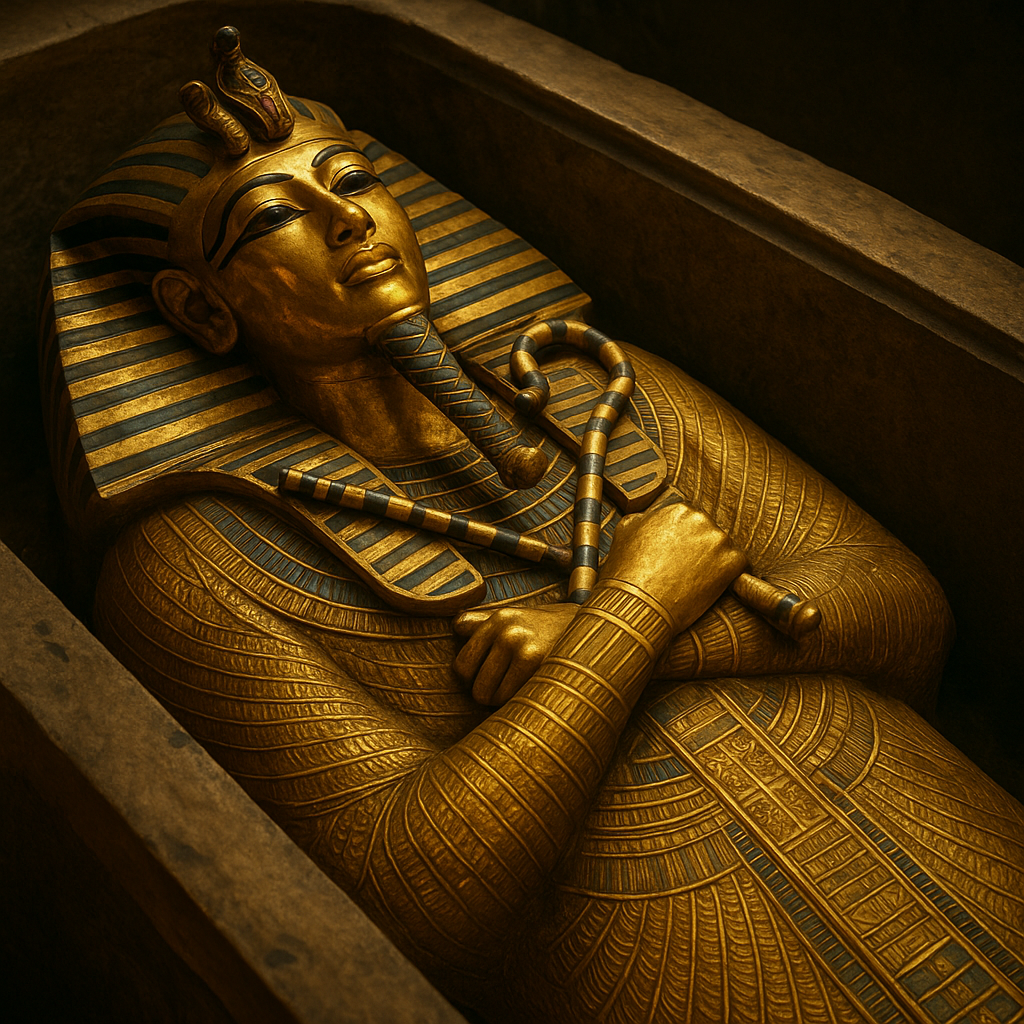
It was used extensively in jewellery, tombs, armour, shrines, sarcophagi, and ornamental weapons because it could be beaten into thin sheets.
Gold was more than rare; it symbolized wealth, power, and divinity.
Egyptians believed gold was the flesh of the sun god Ra.
In fact, it was so valued that it was often referred to as “the skin of gods.”
The obsession peaked between 1550 BCE and 1070 BCE, during which pharaohs like Tutankhamun were buried with enormous amounts of gold.
The Mycenaean’s, Greeks, and Romans: Gold’s journey through time
The Mycenaean’s (1600–1100 BCE) Among the earliest Europeans to adopt gold, the Mycenaean’s used it in weaponry, religious settings, and jewellery.
One of the most significant discoveries from this time is the Death Mask of Agamemnon.
Crafted from a single sheet of gold, the mask required skilful heating and hammering.

Greek Classical Age (5th–4th Century BCE)
Gold had a profound influence on Greek philosophy, literature, art, and architecture.
It represented divinity and status due to its rarity.
Greeks used gold coins such as the stater to fund military campaigns, trade, and sway alliances.
Notable artworks like the statue of Athena Parthenos were crafted using gold and ivory.
Roman Classical Age (1st Century BCE–5th Century CE)
The Romans were among the first civilizations to use gold coinage as part of their monetary system.
The Aureus, a Roman gold coin, was widely used under Julius Caesar around 46 BCE.
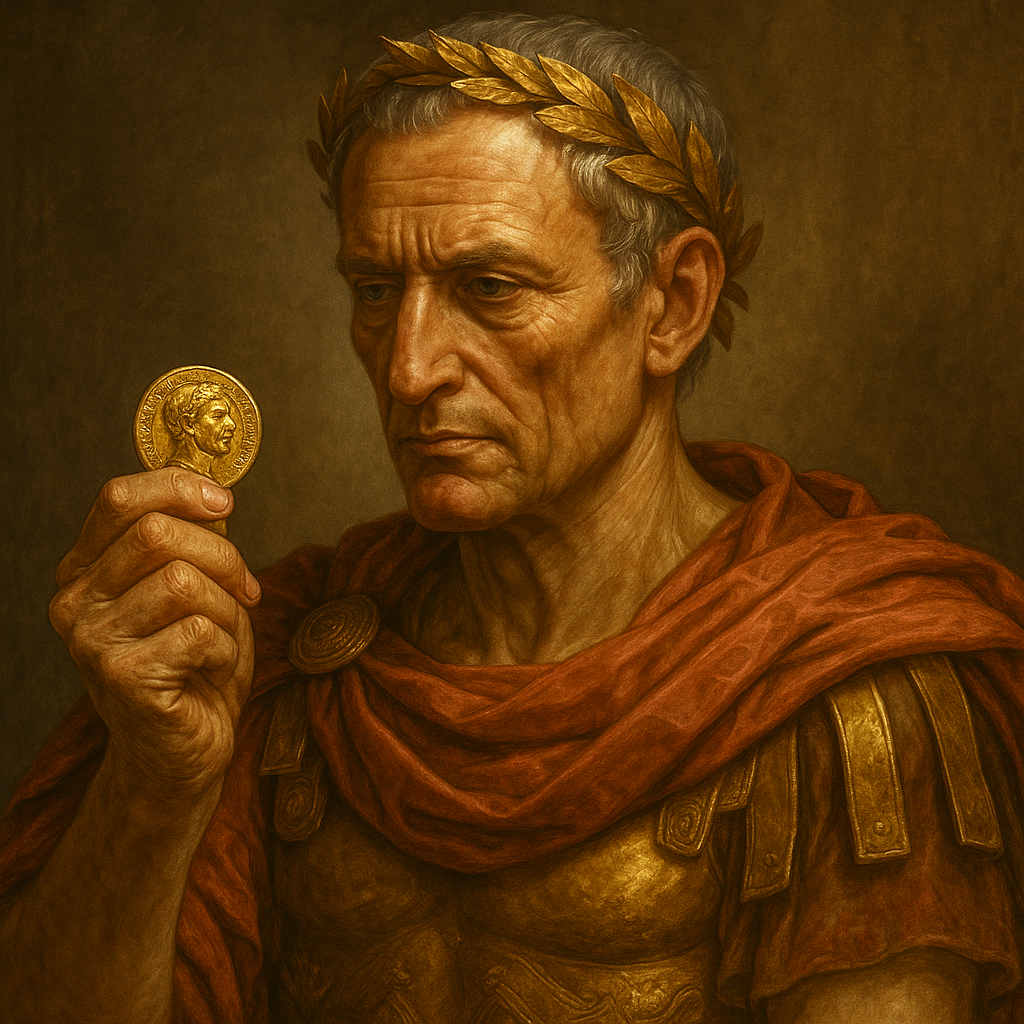
Under Augustus in 27 BCE, the Aureus was standardized to ensure consistent weight and purity, typically 7.9 grams of nearly pure gold.
This consistency helped build trust in gold’s value for trade and taxation.
The Inca Civilization (13th–14th Century): Gold’s journey through time
The Inca civilization of South America had a highly developed culture.
Unlike others, the Incas did not see gold as a symbol of wealth or power.
Instead, they believed gold was the sweat of the gods (a sacred gift from the Sun God).
Gold had ceremonial and spiritual value rather than economic utility.
The Incas relied on a barter system rather than using gold as currency.
From Gold to Fiat Currency: Gold’s journey through time
The Gold Standard: Stability Through Value the Gold Standard, also known as the “Golden Age,” provided long-term price stability.
Countries pegged their currencies to gold, making international trade more predictable and reliable.
In the 18th century, central banks introduced representative money linked to gold.
(For more, check out our blog on the history of banking.)
Countries with the largest gold reserves like: The United States, the United Kingdom, Germany, France, and Japan, rose as global superpowers.
These nations used gold to strengthen their currencies.
The rule was simple: the more gold you had, the more currency you could print.
Governments couldn’t print more money than their gold reserves allowed, ensuring spending remained under control.
When Paper Replaces Gold: The Weimar Republic
The downfall of removing gold from currency systems is best illustrated by Germany’s Weimar Republic.
After World War I, Germany faced immense economic challenges.
They signed the Treaty of Versailles in 1919, obligating them to pay reparations in foreign currencies or gold.
Rather than raise taxes, Germany borrowed to fund the war, and eventually, removed the Mark from the gold standard.
Freed from restraint, they printed massive amounts of paper money.
But paper money relies on trust. Once that trust fades, the currency collapsed.
By 1923, hyperinflation was rampant. Prices skyrocketed, with a loaf of bread rising from 1 mark in 1919 to over 1 billion marks by 1923.
People resorted to burning currency for heat because it was cheaper than buying firewood.
This crisis illustrates that paper money, without value backing, can lead to economic ruin.
Modern Fiat Currency
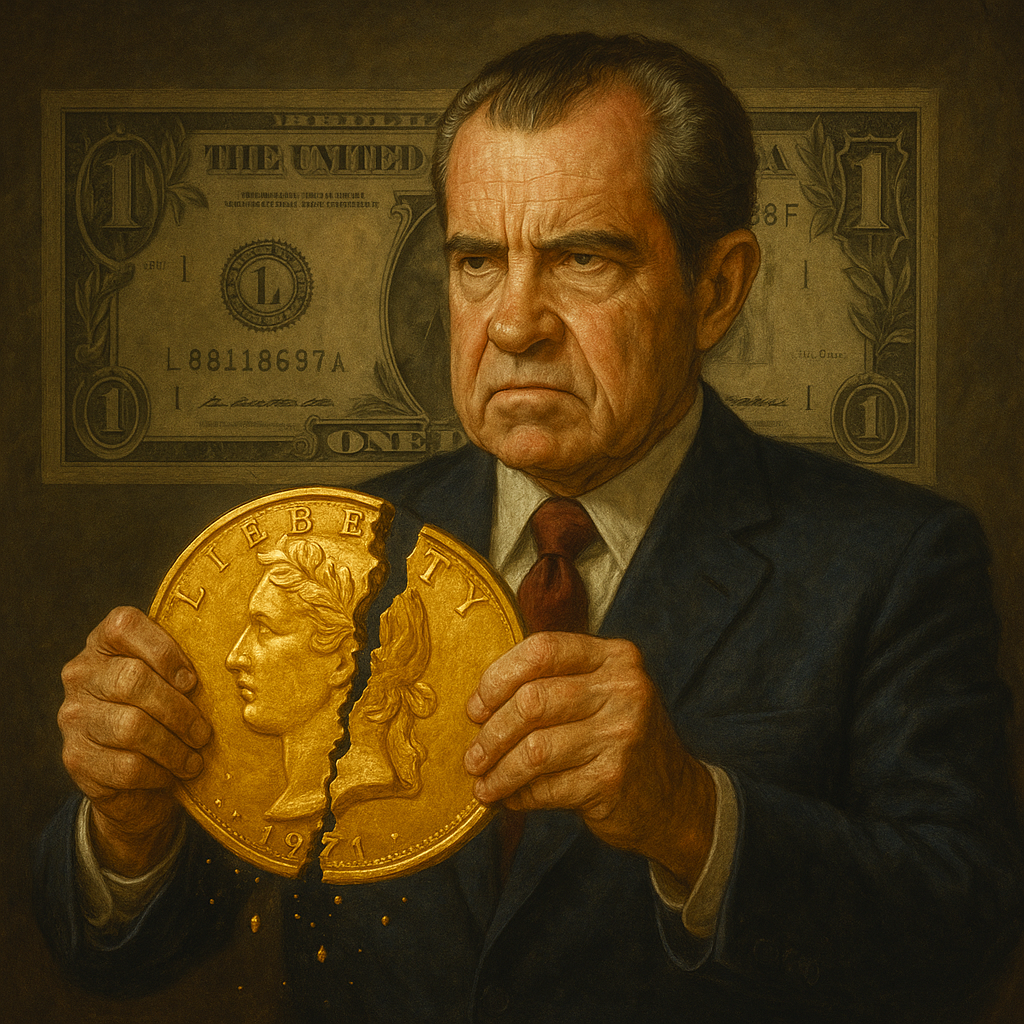
The End of the Gold Standard in 1971, U.S. President Richard Nixon officially ended the gold standard, transitioning the world to a fiat currency system.
Now, currencies were no longer backed by gold but were instead compared to the U.S. dollar.
This gave governments the flexibility to raise funds without raising taxes (a politically unpopular move).
Inflation: The Hidden Tax
Governments now use inflation as a stealthy way to extract wealth from citizens.
Here’s how it works: when the government needs money for public services or emergencies, they print more currency.
This devalues the existing money supply.
Rather than increasing income tax or VAT, governments issue bonds to central banks, which then create new digital money.
Once this money enters the economy, the value of existing money diminishes.
For example, if you saved R100 last year, inflation reduces its purchasing power, you can buy less with the same amount.
The government still benefits. As prices rise, they collect more VAT and if they owe large amounts of debt, inflation allows them to repay it with money that is worth less.
In essence they repay R1 trillion in weaker currency, making it cheaper for them but costlier for citizens.
Conclusion
Gold has journeyed through time as a symbol of divine power, wealth, and economic stability.
From the tombs of pharaohs to the coins of empires and beyond, gold has shaped civilizations and economies.
The shift to fiat currency allowed modern governments more control but also opened the door to manipulation and hidden wealth extraction.
In a world where paper money can be printed at will, gold remains a silent standard: a reminder of value that endures beyond policy, inflation, and power.
Looking back now, understanding gold is only one part of understanding money. The deeper question is how modern banking, currency creation and financial systems shape everyday life… explored further in What Your Bank Doesn’t Teach You.
It is no surprise that gold continues to be trusted long after empires have fallen and economies have changed. Its journey is far from over.